God Is at Work. You’re Invited Into the Story.
Around the world, God is moving through ordinary people who pray, give, go, and serve. Hold the Rope helps you discover the stories—and find your place in them. Read More
MISSIONS IN
God is moving in Germany
For missions in Germany, the central context is the birthplace of the Reformation and later Pietist mission movements, now one of Europe’s largest secular and immigrant mission fields. 27 unreached people groups remain, representing about 5,071,300 people; Turk is the largest listed community. Churches and workers can serve best by strengthening indigenous leadership, pursuing thoughtful evangelism, and responding to the practical pressures.
 84M
POPULATION
84M
POPULATION
 62.9%
CHRISTIANS
62.9%
CHRISTIANS
 99%
LITERACY
99%
LITERACY
 27
UNREACHED PEOPLE GROUPS
27
UNREACHED PEOPLE GROUPS
 Turk
LARGEST UNREACHED PEOPLE GROUP
Turk
LARGEST UNREACHED PEOPLE GROUP
 5.1M
UNREACHED POPULATION
5.1M
UNREACHED POPULATION
 Berlin
CAPITAL CITY
Berlin
CAPITAL CITY
 Berlin
Hamburg
Munich
LARGEST CITIES
Berlin
Hamburg
Munich
LARGEST CITIES
 Euro
CURRENCY
Euro
CURRENCY
 Temperate climate, with cool winters, mild to warm summers, year-round rainfall, and colder alpine.
CLIMATE
Temperate climate, with cool winters, mild to warm summers, year-round rainfall, and colder alpine.
CLIMATE
 German
PRIMARY LANGUAGES
German
PRIMARY LANGUAGES
 Islam
LARGEST UNREACHED RELIGION
Islam
LARGEST UNREACHED RELIGION
Around the world, God is moving through ordinary people who pray, give, go, and serve. Hold the Rope helps you discover the stories—and find your place in them. Read More
 Bible Translation
German Bibles are ubiquitous, while Turkish, Arabic, Persian, and other diaspora languages expand current Gospel access.
Bible Translation
German Bibles are ubiquitous, while Turkish, Arabic, Persian, and other diaspora languages expand current Gospel access.
 Church Planting
New churches can reach secular Germans and immigrant neighborhoods where historic church structures have declined.
Church Planting
New churches can reach secular Germans and immigrant neighborhoods where historic church structures have declined.
 Disaster Relief
Church planting remains urgent among Somali, coastal Muslim.
Disaster Relief
Church planting remains urgent among Somali, coastal Muslim.
 Education
Church planting remains urgent among Somali, coastal Muslim.
Education
Church planting remains urgent among Somali, coastal Muslim.
 Gospel Access
Twenty-seven UPGs remain, including more than five million unreached Turks, Germany's largest listed group.
Gospel Access
Twenty-seven UPGs remain, including more than five million unreached Turks, Germany's largest listed group.
 Human Trafficking
Church planting remains urgent among Somali, coastal Muslim.
Human Trafficking
Church planting remains urgent among Somali, coastal Muslim.
 Medical Missions
Church planting remains urgent among Somali, coastal Muslim.
Medical Missions
Church planting remains urgent among Somali, coastal Muslim.
 Orphans & Vulnerable Children
Church planting remains urgent among Somali, coastal Muslim.
Orphans & Vulnerable Children
Church planting remains urgent among Somali, coastal Muslim.
 Persecuted Church
Religious freedom is strong; secularization and the challenge of integrating Muslim-background believers loom larger.
Persecuted Church
Religious freedom is strong; secularization and the challenge of integrating Muslim-background believers loom larger.
 Poverty & Justice
Churches can serve refugees and low-income urban families while helping newcomers integrate without losing dignity.
Poverty & Justice
Churches can serve refugees and low-income urban families while helping newcomers integrate without losing dignity.
 Unreached People Groups
Millions still have little or no access to the gospel in their language and culture.
Unreached People Groups
Millions still have little or no access to the gospel in their language and culture.
Global
Around the world, God is moving through ordinary people who pray, give, go, and serve. Hold the Rope helps you discover the stories—and find your place in them.

Global
Missions was never meant to be a solo adventure. Invite your family, friends, small group, or church to discover what God is doing and join you in holding the rope.
Global
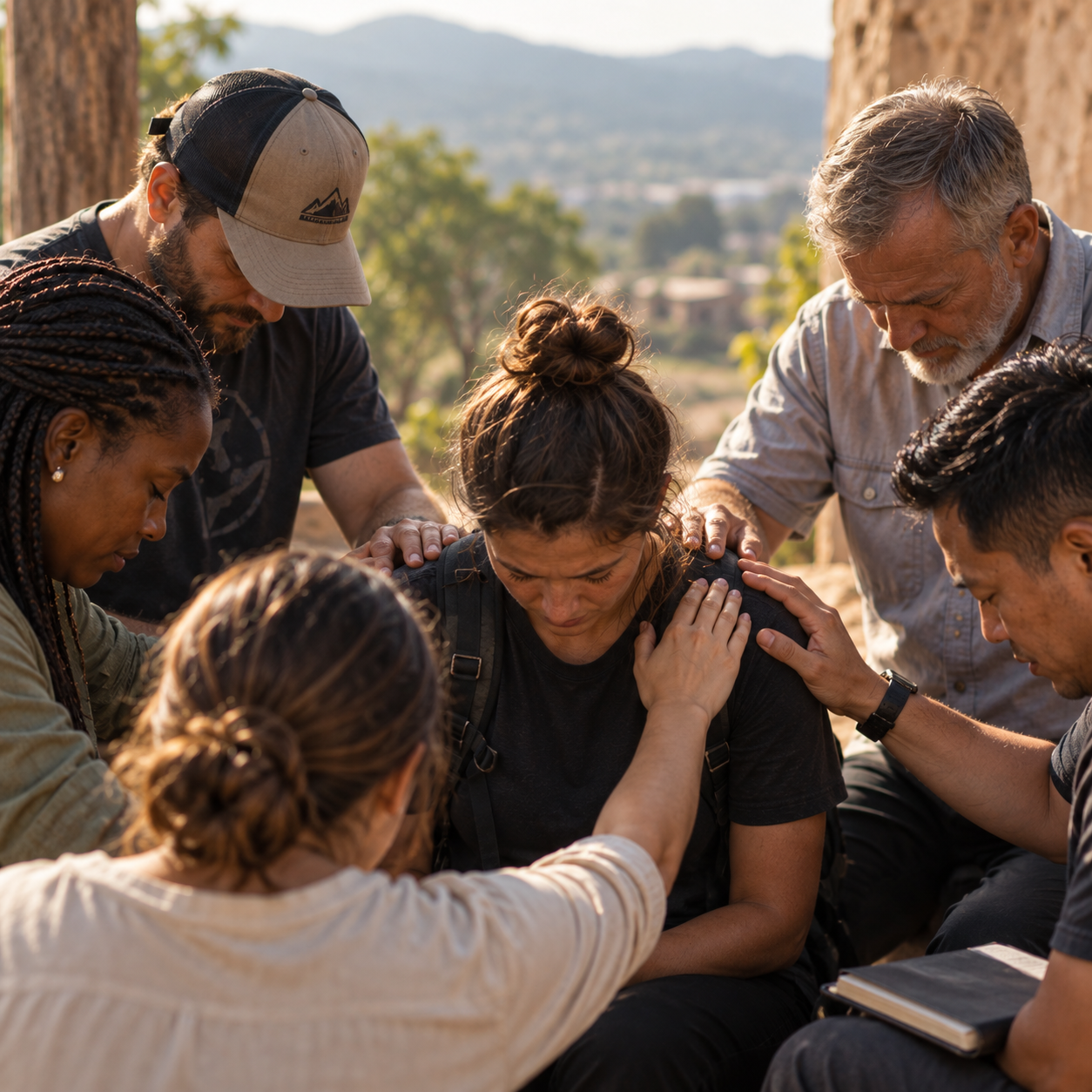
You’re on the front lines. We want to stand behind you. Join Hold the Rope to share your story, prayer needs, and ministry with people ready to pray and engage.

 Prayer
 Mission
 Research &
 Training &
 Videos &
 Missions
Evangelical mission in Germany cannot be understood apart from its historical setting. Luther’s Reformation reshaped Europe, Pietism renewed personal faith in the 17th century, and Halle and Moravian movements helped pioneer global Protestant missions; postwar immigration later transformed German cities. The movement changed as national Christians moved from receiving ministry to leading churches, teaching Scripture, serving communities, and in some cases sending workers themselves.
The Reformation beginning with Martin Luther in 1517 made the German lands central to global Protestant history.
Pietist centers such as Halle later emphasized personal faith, Bible reading, education, and organized missionary sending.
German-speaking Moravians helped pioneer sustained global mission communities during the 18th century.
War, division, reunification, secularization, and immigration radically reshaped German church life in the 20th century.
German evangelicals now face a major home mission field that includes secular Germans and millions of unreached immigrants.
Be a part of what God is doing in Germany
PRAY ENGAGE GIVE GO


Download the App
Grab your rope

Hold the Rope makes every effort to publish and maintain accurate, up-to-date information. If you find an error, please email support@holdtherope.com with the page URL and the correction you recommend. Thank you for helping us keep HTR accurate and useful.