God Is at Work. You’re Invited Into the Story.
Around the world, God is moving through ordinary people who pray, give, go, and serve. Hold the Rope helps you discover the stories—and find your place in them. Read More
MISSIONS IN
God is moving in Bulgaria
Missions in Bulgaria are shaped by a post-communist society with deep Orthodox cultural roots and growing secularization, a historic evangelical movement dating to 19th-century Bible work and Congregational missions, and a large Turkish Muslim minority alongside Roma communities with distinct ministry needs. 7 unreached people groups remain, representing about 580,700 people; Turk is the largest listed community.
 6.7M
POPULATION
6.7M
POPULATION
 83.7%
CHRISTIANS
83.7%
CHRISTIANS
 98.4%
LITERACY
98.4%
LITERACY
 7
UNREACHED PEOPLE GROUPS
7
UNREACHED PEOPLE GROUPS
 Turk
LARGEST UNREACHED PEOPLE GROUP
Turk
LARGEST UNREACHED PEOPLE GROUP
 581K
UNREACHED POPULATION
581K
UNREACHED POPULATION
 Sofia
CAPITAL CITY
Sofia
CAPITAL CITY
 Sofia
Plovdiv
Varna
LARGEST CITIES
Sofia
Plovdiv
Varna
LARGEST CITIES
 Bulgarian
Lev
CURRENCY
Bulgarian
Lev
CURRENCY
 Temperate continental climate, with hot summers, cold winters, and milder conditions along the Black Sea.
CLIMATE
Temperate continental climate, with hot summers, cold winters, and milder conditions along the Black Sea.
CLIMATE
 Bulgarian
PRIMARY LANGUAGES
Bulgarian
PRIMARY LANGUAGES
 Islam
LARGEST UNREACHED RELIGION
Islam
LARGEST UNREACHED RELIGION
Around the world, God is moving through ordinary people who pray, give, go, and serve. Hold the Rope helps you discover the stories—and find your place in them. Read More
 Bible Translation
The 1871 Bulgarian Bible remains a landmark; today's need is renewed Scripture engagement in Bulgarian.
Bible Translation
The 1871 Bulgarian Bible remains a landmark; today's need is renewed Scripture engagement in Bulgarian.
 Church Planting
New congregations are especially valuable in smaller towns and neighborhoods with little evangelical life.
Church Planting
New congregations are especially valuable in smaller towns and neighborhoods with little evangelical life.
 Disaster Relief
Church planting remains urgent among Somali, coastal Muslim.
Disaster Relief
Church planting remains urgent among Somali, coastal Muslim.
 Education
Church planting remains urgent among Somali, coastal Muslim.
Education
Church planting remains urgent among Somali, coastal Muslim.
 Gospel Access
Seven UPGs remain, with Bulgaria's Turkish community representing the country's largest unreached people.
Gospel Access
Seven UPGs remain, with Bulgaria's Turkish community representing the country's largest unreached people.
 Human Trafficking
Church planting remains urgent among Somali, coastal Muslim.
Human Trafficking
Church planting remains urgent among Somali, coastal Muslim.
 Medical Missions
Church planting remains urgent among Somali, coastal Muslim.
Medical Missions
Church planting remains urgent among Somali, coastal Muslim.
 Orphans & Vulnerable Children
Church planting remains urgent among Somali, coastal Muslim.
Orphans & Vulnerable Children
Church planting remains urgent among Somali, coastal Muslim.
 Persecuted Church
Evangelicals worship legally, though minority churches can still encounter social suspicion or local bias.
Persecuted Church
Evangelicals worship legally, though minority churches can still encounter social suspicion or local bias.
 Poverty & Justice
Congregations can serve marginalized Roma communities through job skills, tutoring, and family support.
Poverty & Justice
Congregations can serve marginalized Roma communities through job skills, tutoring, and family support.
 Unreached People Groups
Millions still have little or no access to the gospel in their language and culture.
Unreached People Groups
Millions still have little or no access to the gospel in their language and culture.
Global
Around the world, God is moving through ordinary people who pray, give, go, and serve. Hold the Rope helps you discover the stories—and find your place in them.

Global
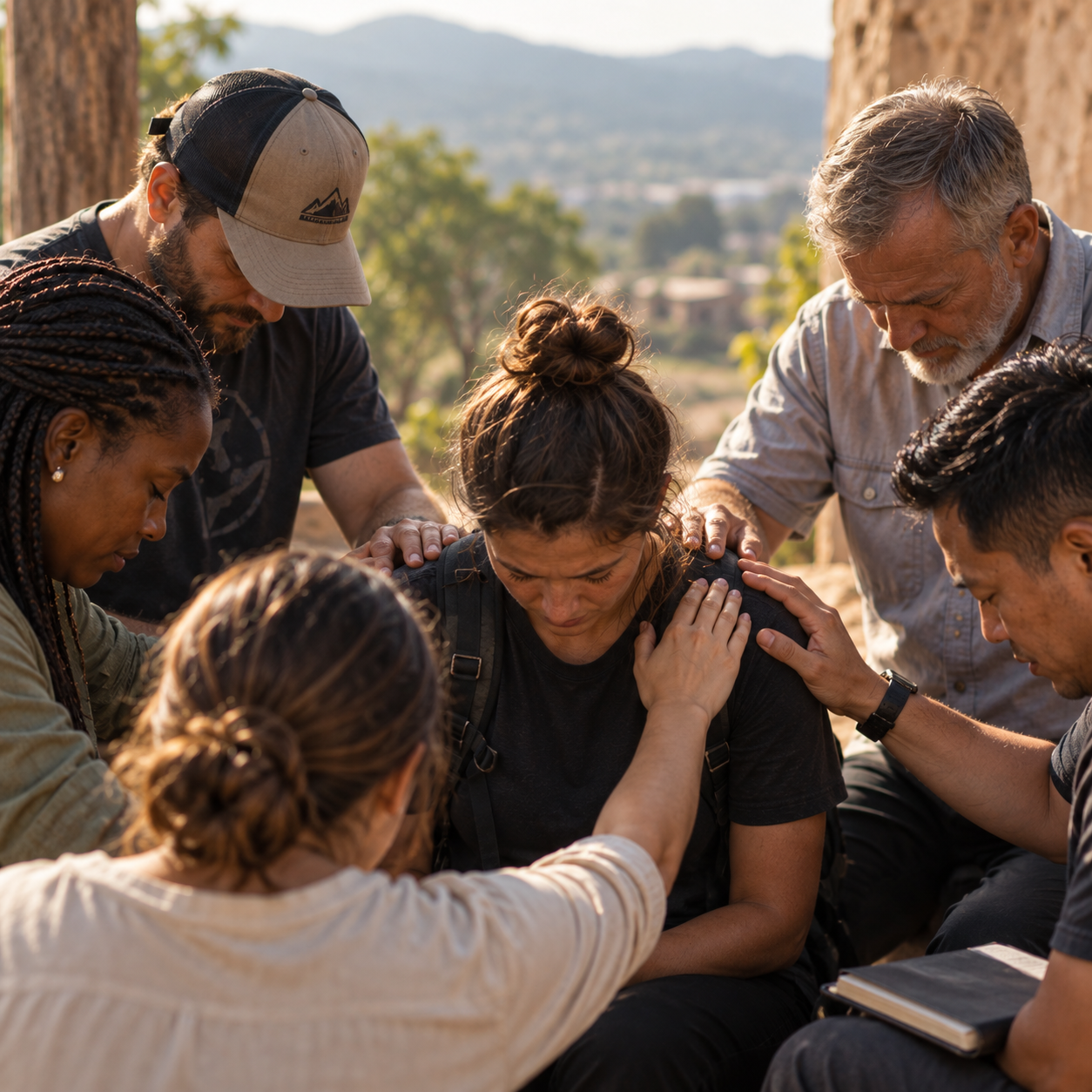
Missions was never meant to be a solo adventure. Invite your family, friends, small group, or church to discover what God is doing and join you in holding the rope.
Global
You’re on the front lines. We want to stand behind you. Join Hold the Rope to share your story, prayer needs, and ministry with people ready to pray and engage.

 Prayer
 Mission
 Research &
 Training &
 Videos &
 Missions
Bulgaria’s modern evangelical story began in the 19th century through Bible translation, colporteurs, and Congregational mission. The first complete modern Bulgarian Bible, published in 1871, became important not only to churches but also to the development of literary Bulgarian. Baptists, Methodists, Pentecostals, and other movements later expanded. Communist rule brought surveillance, imprisonment, and state control of churches. After 1989.
American Congregational workers and Bible colporteurs helped establish evangelical witness in 19th-century Bulgaria.
The complete Bulgarian Bible published in 1871 became a landmark for both Scripture access and national language.
Communist authorities later surveilled churches, imprisoned pastors, and brought evangelical institutions under control.
Religious freedom after 1989 opened space for new congregations, Bible schools, youth work, and Roma ministry.
Bulgarian evangelicals now serve secular neighbors while pursuing deeper ministry among Roma and Turkish communities.
Be a part of what God is doing in Bulgaria
PRAY ENGAGE GIVE GO


Download the App
Grab your rope
Hold the Rope makes every effort to publish and maintain accurate, up-to-date information. If you find an error, please email support@holdtherope.com with the page URL and the correction you recommend. Thank you for helping us keep HTR accurate and useful.