God Is at Work. You’re Invited Into the Story.
Around the world, God is moving through ordinary people who pray, give, go, and serve. Hold the Rope helps you discover the stories—and find your place in them. Read More
MISSIONS IN
God is moving in Kiribati
Kiribati’s mission field is shaped by a remote Pacific island nation with broad Christian identification and ministry shaped by migration, isolation, and climate vulnerability. No UPGs are listed, making renewal and missionary sending more urgent than frontier access. Its evangelical story has distinctive roots: Congregational mission reached the Gilbert Islands during the 19th century through Pacific and Hawaiian Christian networks.
 136K
POPULATION
136K
POPULATION
 96.9%
CHRISTIANS
96.9%
CHRISTIANS
 98.9%
LITERACY
98.9%
LITERACY
 0
UNREACHED PEOPLE GROUPS
0
UNREACHED PEOPLE GROUPS
 0
UNREACHED POPULATION
0
UNREACHED POPULATION
 South
Tarawa
CAPITAL CITY
South
Tarawa
CAPITAL CITY
 South Tarawa
Betio
Bikenibeu
LARGEST CITIES
South Tarawa
Betio
Bikenibeu
LARGEST CITIES
 Australian
Dollar
CURRENCY
Australian
Dollar
CURRENCY
 Tropical maritime climate, with warm humid weather, modest rainfall variation, and serious sea-level.
CLIMATE
Tropical maritime climate, with warm humid weather, modest rainfall variation, and serious sea-level.
CLIMATE
 Gilbertese
English
PRIMARY LANGUAGES
Gilbertese
English
PRIMARY LANGUAGES
Around the world, God is moving through ordinary people who pray, give, go, and serve. Hold the Rope helps you discover the stories—and find your place in them. Read More
 Bible Translation
Bible ministry in Kiribati should prioritize clear Scripture access and meaningful engagement.
Bible Translation
Bible ministry in Kiribati should prioritize clear Scripture access and meaningful engagement.
 Church Planting
Island teachers and pastors became essential because the scattered atolls made permanent foreign staffing difficult.
Church Planting
Island teachers and pastors became essential because the scattered atolls made permanent foreign staffing difficult.
 Disaster Relief
Church planting remains urgent among Somali, coastal Muslim.
Disaster Relief
Church planting remains urgent among Somali, coastal Muslim.
 Education
Church planting remains urgent among Somali, coastal Muslim.
Education
Church planting remains urgent among Somali, coastal Muslim.
 Gospel Access
No UPGs are listed for Kiribati; Gospel-access strategy should therefore emphasize renewal, discipleship.
Gospel Access
No UPGs are listed for Kiribati; Gospel-access strategy should therefore emphasize renewal, discipleship.
 Human Trafficking
Church planting remains urgent among Somali, coastal Muslim.
Human Trafficking
Church planting remains urgent among Somali, coastal Muslim.
 Medical Missions
Church planting remains urgent among Somali, coastal Muslim.
Medical Missions
Church planting remains urgent among Somali, coastal Muslim.
 Orphans & Vulnerable Children
Church planting remains urgent among Somali, coastal Muslim.
Orphans & Vulnerable Children
Church planting remains urgent among Somali, coastal Muslim.
 Persecuted Church
Kiribati churches now face the spiritual and practical pressures of urban crowding, diaspora.
Persecuted Church
Kiribati churches now face the spiritual and practical pressures of urban crowding, diaspora.
 Poverty & Justice
Churches in Kiribati can address poverty through dignifying help that strengthens families and livelihoods.
Poverty & Justice
Churches in Kiribati can address poverty through dignifying help that strengthens families and livelihoods.
 Unreached People Groups
Millions still have little or no access to the gospel in their language and culture.
Unreached People Groups
Millions still have little or no access to the gospel in their language and culture.
Global
Around the world, God is moving through ordinary people who pray, give, go, and serve. Hold the Rope helps you discover the stories—and find your place in them.

Global
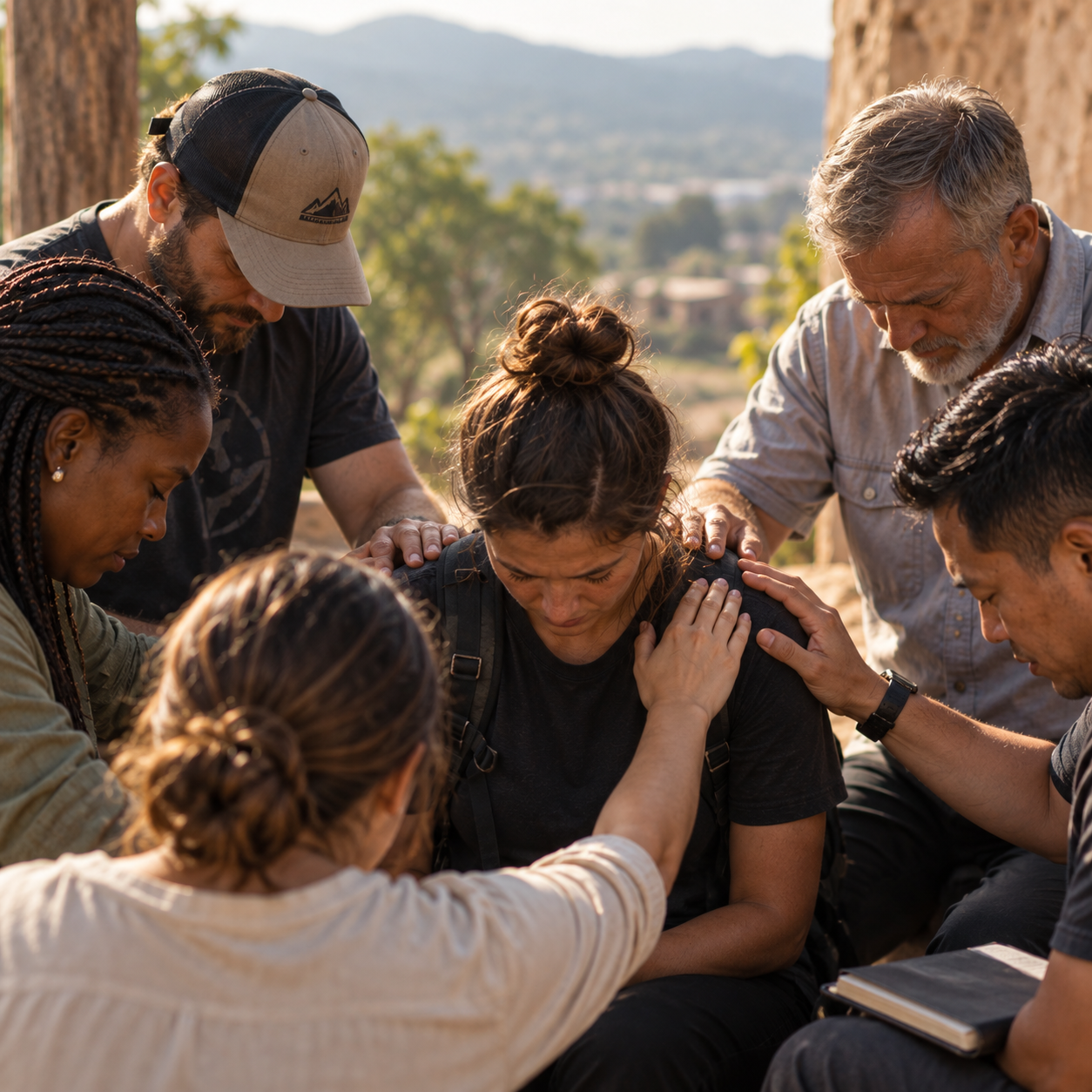
Missions was never meant to be a solo adventure. Invite your family, friends, small group, or church to discover what God is doing and join you in holding the rope.
Global
You’re on the front lines. We want to stand behind you. Join Hold the Rope to share your story, prayer needs, and ministry with people ready to pray and engage.

 Prayer
 Mission
 Research &
 Training &
 Videos &
 Missions
The evangelical story in Kiribati developed through several important transitions. 19th-century Congregational mission spread through Micronesian and Hawaiian connections, with island pastors becoming central to church life; modern churches now serve dispersed atolls and diaspora communities. What began through particular mission movements increasingly became the work of national believers who built congregations, trained leaders, and adapted ministry to local realities.
Congregational mission reached the Gilbert Islands during the 19th century through Pacific and Hawaiian Christian networks.
Island teachers and pastors became essential because the scattered atolls made permanent foreign staffing difficult.
Local churches developed strong community roles in education, worship, and social life through the colonial era.
Independence in 1979 placed church leadership fully within a sovereign island nation increasingly shaped by migration.
Kiribati churches now face the spiritual and practical pressures of urban crowding, diaspora, and climate-driven displacement.
Be a part of what God is doing in Kiribati
PRAY ENGAGE GIVE GO


Download the App
Grab your rope

Hold the Rope makes every effort to publish and maintain accurate, up-to-date information. If you find an error, please email support@holdtherope.com with the page URL and the correction you recommend. Thank you for helping us keep HTR accurate and useful.