God Is at Work. You’re Invited Into the Story.
Around the world, God is moving through ordinary people who pray, give, go, and serve. Hold the Rope helps you discover the stories—and find your place in them. Read More
MISSIONS IN
God is moving in Bhutan
Missions in Bhutan focus on a Himalayan kingdom where Gospel access remains extremely limited. There are 57 unreached people groups and about 788,000 unreached people—virtually the entire population—with the Drukpa as the largest group. A small community of believers exists, but churches lack official recognition and public ministry is constrained, making home fellowship, discipleship, Scripture, prayer.
 794K
POPULATION
794K
POPULATION
 2.4%
CHRISTIANS
2.4%
CHRISTIANS
 64.9%
LITERACY
64.9%
LITERACY
 57
UNREACHED PEOPLE GROUPS
57
UNREACHED PEOPLE GROUPS
 Drukpa
LARGEST UNREACHED PEOPLE GROUP
Drukpa
LARGEST UNREACHED PEOPLE GROUP
 788K
UNREACHED POPULATION
788K
UNREACHED POPULATION
 Thimphu
CAPITAL CITY
Thimphu
CAPITAL CITY
 Thimphu
Phuntsholing
Paro
LARGEST CITIES
Thimphu
Phuntsholing
Paro
LARGEST CITIES
 Bhutanese
Ngultrum
CURRENCY
Bhutanese
Ngultrum
CURRENCY
 Mountain climate varying sharply by elevation, from humid subtropical valleys to cold alpine Himalayan.
CLIMATE
Mountain climate varying sharply by elevation, from humid subtropical valleys to cold alpine Himalayan.
CLIMATE
 Dzongkha
PRIMARY LANGUAGES
Dzongkha
PRIMARY LANGUAGES
 Buddhism
LARGEST UNREACHED RELIGION
Buddhism
LARGEST UNREACHED RELIGION
Around the world, God is moving through ordinary people who pray, give, go, and serve. Hold the Rope helps you discover the stories—and find your place in them. Read More
 Bible Translation
Dzongkha and other local-language Scripture resources are vital where imports are limited.
Bible Translation
Dzongkha and other local-language Scripture resources are vital where imports are limited.
 Church Planting
House fellowships need mature Bhutanese leaders because formal registration is unavailable.
Church Planting
House fellowships need mature Bhutanese leaders because formal registration is unavailable.
 Disaster Relief
Church planting remains urgent among Somali, coastal Muslim.
Disaster Relief
Church planting remains urgent among Somali, coastal Muslim.
 Education
Church planting remains urgent among Somali, coastal Muslim.
Education
Church planting remains urgent among Somali, coastal Muslim.
 Gospel Access
About 788,000 people in 57 UPGs are unreached, and the Drukpa are the largest group.
Gospel Access
About 788,000 people in 57 UPGs are unreached, and the Drukpa are the largest group.
 Human Trafficking
Church planting remains urgent among Somali, coastal Muslim.
Human Trafficking
Church planting remains urgent among Somali, coastal Muslim.
 Medical Missions
Church planting remains urgent among Somali, coastal Muslim.
Medical Missions
Church planting remains urgent among Somali, coastal Muslim.
 Orphans & Vulnerable Children
Church planting remains urgent among Somali, coastal Muslim.
Orphans & Vulnerable Children
Church planting remains urgent among Somali, coastal Muslim.
 Persecuted Church
Unregistered churches cannot organize publicly, own property, or conduct outreach freely.
Persecuted Church
Unregistered churches cannot organize publicly, own property, or conduct outreach freely.
 Poverty & Justice
Rural isolation and limited opportunity create needs for practical service and community support.
Poverty & Justice
Rural isolation and limited opportunity create needs for practical service and community support.
 Unreached People Groups
Millions still have little or no access to the gospel in their language and culture.
Unreached People Groups
Millions still have little or no access to the gospel in their language and culture.
Global
Around the world, God is moving through ordinary people who pray, give, go, and serve. Hold the Rope helps you discover the stories—and find your place in them.

Global
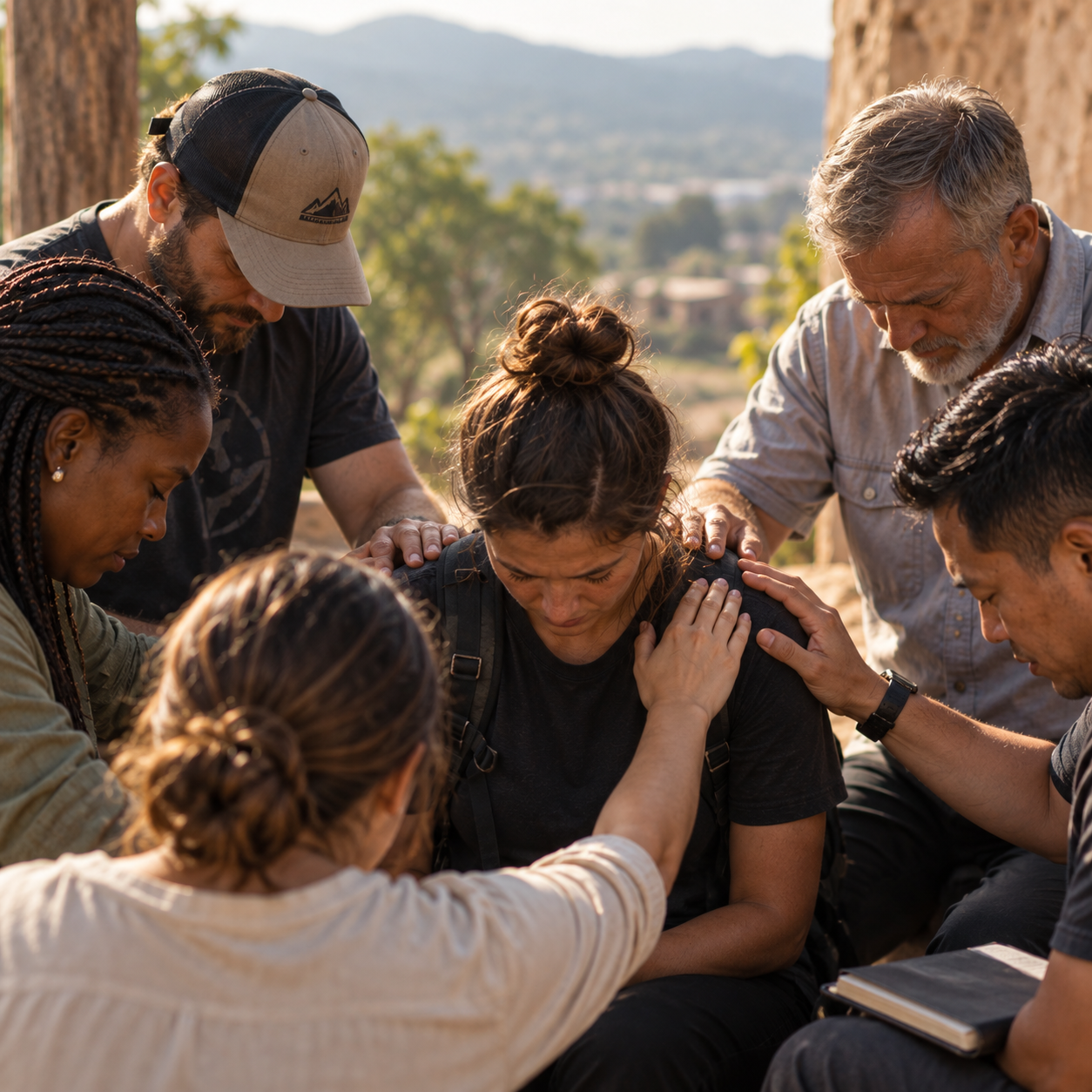
Missions was never meant to be a solo adventure. Invite your family, friends, small group, or church to discover what God is doing and join you in holding the rope.
Global
You’re on the front lines. We want to stand behind you. Join Hold the Rope to share your story, prayer needs, and ministry with people ready to pray and engage.

 Prayer
 Mission
 Research &
 Training &
 Videos &
 Missions
Bhutan’s modern evangelical history is relatively recent and largely locally driven. Small Christian communities emerged during the 20th century through contact with believers in neighboring India and Nepal, and congregations developed especially in southern towns and later Thimphu. Bhutan’s constitution protects religious freedom in principle, but Christian organizations have repeatedly lacked formal registration, limiting public church life. Despite those constraints, pastors report many private congregations. Today, the movement depends heavily on discreet fellowship, mature local leadership, accessible Scripture, and patient discipleship.
Early Bhutanese believers often encountered the Gospel through neighboring India and Nepal.
Small fellowships developed during the late 20th century, especially in southern communities.
Local pastors increasingly led house churches as the number of Bhutanese believers grew.
Registration barriers kept most Christian worship in homes and private meeting spaces.
Today, 57 UPGs remain while a small local church continues growing through quiet discipleship.
Be a part of what God is doing in Bhutan
PRAY ENGAGE GIVE GO


Download the App
Grab your rope

Hold the Rope makes every effort to publish and maintain accurate, up-to-date information. If you find an error, please email support@holdtherope.com with the page URL and the correction you recommend. Thank you for helping us keep HTR accurate and useful.