
God Is at Work. You’re Invited Into the Story.
Around the world, God is moving through ordinary people who pray, give, go, and serve. Hold the Rope helps you discover the stories—and find your place in them. Read More
MISSIONS IN
God is moving in South Korea
Understanding missions in South Korea begins with one of the modern era’s most remarkable evangelical growth stories and one of the world’s largest missionary-sending churches. 11 unreached people groups remain, representing about 446,500 people; Thai is the largest listed community. The strongest opportunities combine locally led discipleship, thoughtful evangelism, and practical service rooted in trusted church relationships.
 52M
POPULATION
52M
POPULATION
 33.1%
CHRISTIANS
33.1%
CHRISTIANS
 99%
LITERACY
99%
LITERACY
 11
UNREACHED PEOPLE GROUPS
11
UNREACHED PEOPLE GROUPS
 Thai
LARGEST UNREACHED PEOPLE GROUP
Thai
LARGEST UNREACHED PEOPLE GROUP
 447K
UNREACHED POPULATION
447K
UNREACHED POPULATION
 Seoul
CAPITAL CITY
Seoul
CAPITAL CITY
 Seoul
Busan
Incheon
LARGEST CITIES
Seoul
Busan
Incheon
LARGEST CITIES
 South
Korean
Won
CURRENCY
South
Korean
Won
CURRENCY
 Temperate climate, with cold dry winters, hot humid summers, monsoon rains, and four distinct seasons.
CLIMATE
Temperate climate, with cold dry winters, hot humid summers, monsoon rains, and four distinct seasons.
CLIMATE
 Korean
PRIMARY LANGUAGES
Korean
PRIMARY LANGUAGES
 Buddhism
LARGEST UNREACHED RELIGION
Buddhism
LARGEST UNREACHED RELIGION
Around the world, God is moving through ordinary people who pray, give, go, and serve. Hold the Rope helps you discover the stories—and find your place in them. Read More
 Bible Translation
Korean Scripture can equip South Korea's believers for ministry among secular young adults.
Bible Translation
Korean Scripture can equip South Korea's believers for ministry among secular young adults.
 Church Planting
Local ownership must shape church multiplication among secular young adults in South Korea.
Church Planting
Local ownership must shape church multiplication among secular young adults in South Korea.
 Disaster Relief
Church planting remains urgent among Somali, coastal Muslim.
Disaster Relief
Church planting remains urgent among Somali, coastal Muslim.
 Education
Church planting remains urgent among Somali, coastal Muslim.
Education
Church planting remains urgent among Somali, coastal Muslim.
 Gospel Access
Gospel-access work in South Korea includes 11 UPGs and about 446,500 people, notably Thai.
Gospel Access
Gospel-access work in South Korea includes 11 UPGs and about 446,500 people, notably Thai.
 Human Trafficking
Church planting remains urgent among Somali, coastal Muslim.
Human Trafficking
Church planting remains urgent among Somali, coastal Muslim.
 Medical Missions
Church planting remains urgent among Somali, coastal Muslim.
Medical Missions
Church planting remains urgent among Somali, coastal Muslim.
 Orphans & Vulnerable Children
Church planting remains urgent among Somali, coastal Muslim.
Orphans & Vulnerable Children
Church planting remains urgent among Somali, coastal Muslim.
 Persecuted Church
The church in South Korea needs prayer as freedom is strong; secularization, burnout.
Persecuted Church
The church in South Korea needs prayer as freedom is strong; secularization, burnout.
 Poverty & Justice
Practical compassion can help low-income elderly people build household resilience in South Korea.
Poverty & Justice
Practical compassion can help low-income elderly people build household resilience in South Korea.
 Unreached People Groups
Millions still have little or no access to the gospel in their language and culture.
Unreached People Groups
Millions still have little or no access to the gospel in their language and culture.
Global
Around the world, God is moving through ordinary people who pray, give, go, and serve. Hold the Rope helps you discover the stories—and find your place in them.

Global
Missions was never meant to be a solo adventure. Invite your family, friends, small group, or church to discover what God is doing and join you in holding the rope.
Global
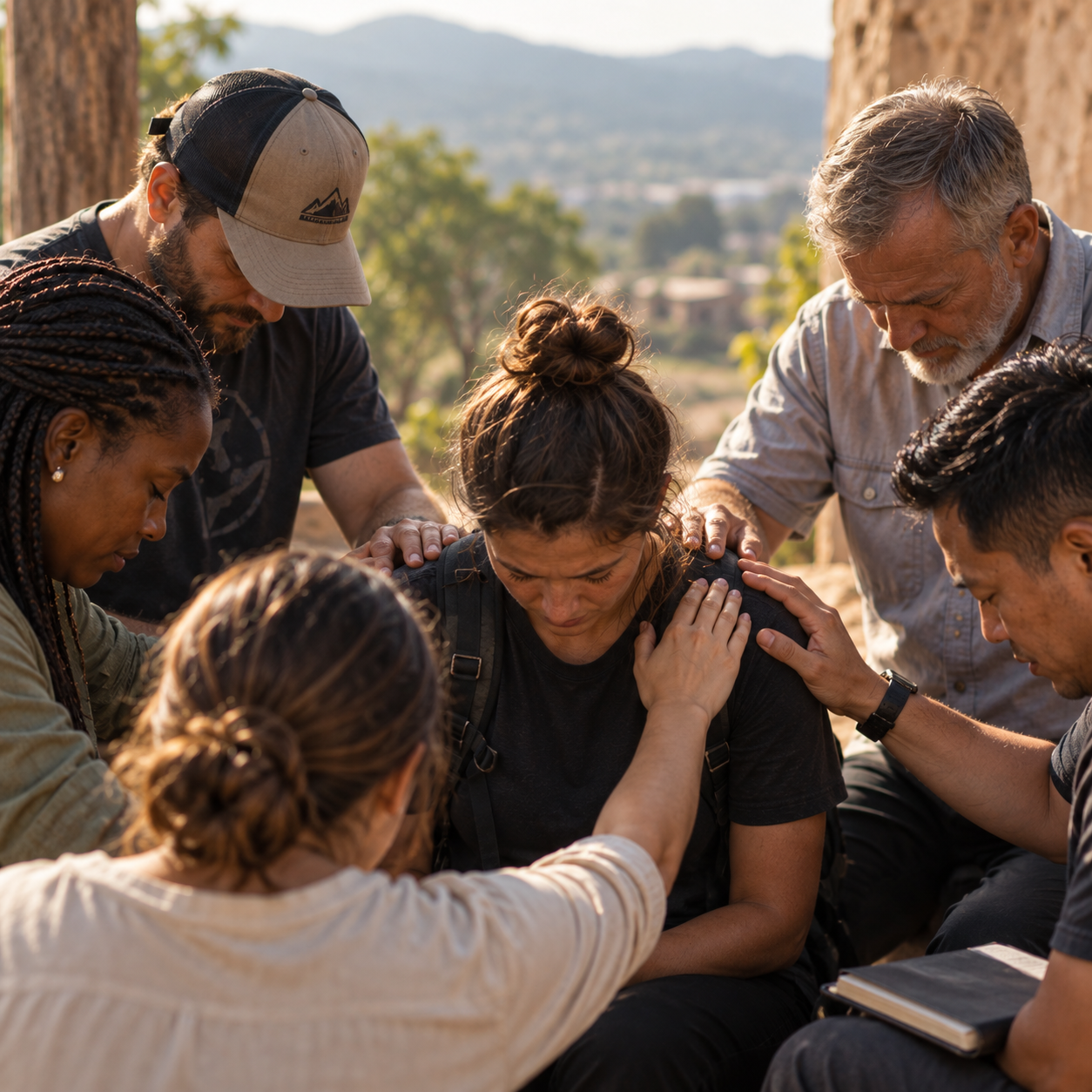
You’re on the front lines. We want to stand behind you. Join Hold the Rope to share your story, prayer needs, and ministry with people ready to pray and engage.

 Prayer
 Mission
 Research &
 Training &
 Videos &
 Missions
Protestant missions began in Korea in the 1880s; the 1907 Pyongyang Revival, Bible education, schools, hospitals, and postwar church growth helped create a powerful South Korean missionary movement. The movement’s lasting strength has come as national pastors and believers assumed greater responsibility for ministry. That history matters because today’s churches must serve secular young adults, Buddhists, migrant workers, and unreached diasporas with greater local ownership.
Protestant missions began in Korea in the 1880s.
the 1907 Pyongyang Revival, Bible education, schools, hospitals, and postwar church growth helped create a powerful South Korean missionary movement.
In South Korea, leadership now has to emerge from a church shaped by one of the modern era's most remarkable evangelical growth stories and one of the world's largest missionary-sending churches; national pastors and lay believers are best positioned to disciple secular young adults, Buddhists, migrant workers, and unreached diasporas.
Contemporary ministry in South Korea now intersects with low-income elderly people and migrant laborers and elderly people and those facing severe mental-health pressure. Churches also need practical readiness for typhoons, floods, heat waves, and wildfires.
South Korea's unfinished task includes Thai, 11 UPGs, and about 446,500 unreached people, all within a setting where freedom is strong; secularization, burnout, and generational decline challenge the church.
Be a part of what God is doing in South Korea
PRAY ENGAGE GIVE GO


Download the App
Grab your rope

Hold the Rope makes every effort to publish and maintain accurate, up-to-date information. If you find an error, please email support@holdtherope.com with the page URL and the correction you recommend. Thank you for helping us keep HTR accurate and useful.