God Is at Work. You’re Invited Into the Story.
Around the world, God is moving through ordinary people who pray, give, go, and serve. Hold the Rope helps you discover the stories—and find your place in them. Read More
MISSIONS IN
God is moving in Tajikistan
Tajikistan is a Persian-speaking Central Asian frontier where Islam shapes national identity and evangelical churches operate under tight regulation. Thirty-one unreached people groups represent about 10.2 million people, with Tajiks the largest listed community. Effective ministry depends on discreet local relationships, diaspora connections, resilient house fellowships, and leaders who can serve without public visibility.
 11M
POPULATION
11M
POPULATION
 0.6%
CHRISTIANS
0.6%
CHRISTIANS
 99.8%
LITERACY
99.8%
LITERACY
 31
UNREACHED PEOPLE GROUPS
31
UNREACHED PEOPLE GROUPS
 Tajik
LARGEST UNREACHED PEOPLE GROUP
Tajik
LARGEST UNREACHED PEOPLE GROUP
 10M
UNREACHED POPULATION
10M
UNREACHED POPULATION
 Dushanbe
CAPITAL CITY
Dushanbe
CAPITAL CITY
 Dushanbe
Khujand
Bokhtar
LARGEST CITIES
Dushanbe
Khujand
Bokhtar
LARGEST CITIES
 Tajikistani
Somoni
CURRENCY
Tajikistani
Somoni
CURRENCY
 Continental climate, with hot dry lowlands, cold winters, elevation effects, and heavy mountain snowfall.
CLIMATE
Continental climate, with hot dry lowlands, cold winters, elevation effects, and heavy mountain snowfall.
CLIMATE
 Tajik
Russian
PRIMARY LANGUAGES
Tajik
Russian
PRIMARY LANGUAGES
 Islam
LARGEST UNREACHED RELIGION
Islam
LARGEST UNREACHED RELIGION
Around the world, God is moving through ordinary people who pray, give, go, and serve. Hold the Rope helps you discover the stories—and find your place in them. Read More
 Bible Translation
Tajik Scripture can equip Tajikistan's believers for ministry among Tajik Muslims through discreet local.
Bible Translation
Tajik Scripture can equip Tajikistan's believers for ministry among Tajik Muslims through discreet local.
 Church Planting
Local ownership must shape church multiplication among Tajik Muslims through discreet local in Tajikistan.
Church Planting
Local ownership must shape church multiplication among Tajik Muslims through discreet local in Tajikistan.
 Disaster Relief
Church planting remains urgent among Somali, coastal Muslim.
Disaster Relief
Church planting remains urgent among Somali, coastal Muslim.
 Education
Church planting remains urgent among Somali, coastal Muslim.
Education
Church planting remains urgent among Somali, coastal Muslim.
 Gospel Access
Roughly 10,225,200 people in Tajikistan live within 31 UPGs; Tajik is the largest need.
Gospel Access
Roughly 10,225,200 people in Tajikistan live within 31 UPGs; Tajik is the largest need.
 Human Trafficking
Church planting remains urgent among Somali, coastal Muslim.
Human Trafficking
Church planting remains urgent among Somali, coastal Muslim.
 Medical Missions
Church planting remains urgent among Somali, coastal Muslim.
Medical Missions
Church planting remains urgent among Somali, coastal Muslim.
 Orphans & Vulnerable Children
Church planting remains urgent among Somali, coastal Muslim.
Orphans & Vulnerable Children
Church planting remains urgent among Somali, coastal Muslim.
 Persecuted Church
Prayer for Tajikistan's church should be grounded in the fact that registered churches face controls.
Persecuted Church
Prayer for Tajikistan's church should be grounded in the fact that registered churches face controls.
 Poverty & Justice
Justice ministry in Tajikistan can serve rural families dependent on remittances without creating dependency.
Poverty & Justice
Justice ministry in Tajikistan can serve rural families dependent on remittances without creating dependency.
 Unreached People Groups
Millions still have little or no access to the gospel in their language and culture.
Unreached People Groups
Millions still have little or no access to the gospel in their language and culture.
Global
Around the world, God is moving through ordinary people who pray, give, go, and serve. Hold the Rope helps you discover the stories—and find your place in them.

Global
Missions was never meant to be a solo adventure. Invite your family, friends, small group, or church to discover what God is doing and join you in holding the rope.
Global
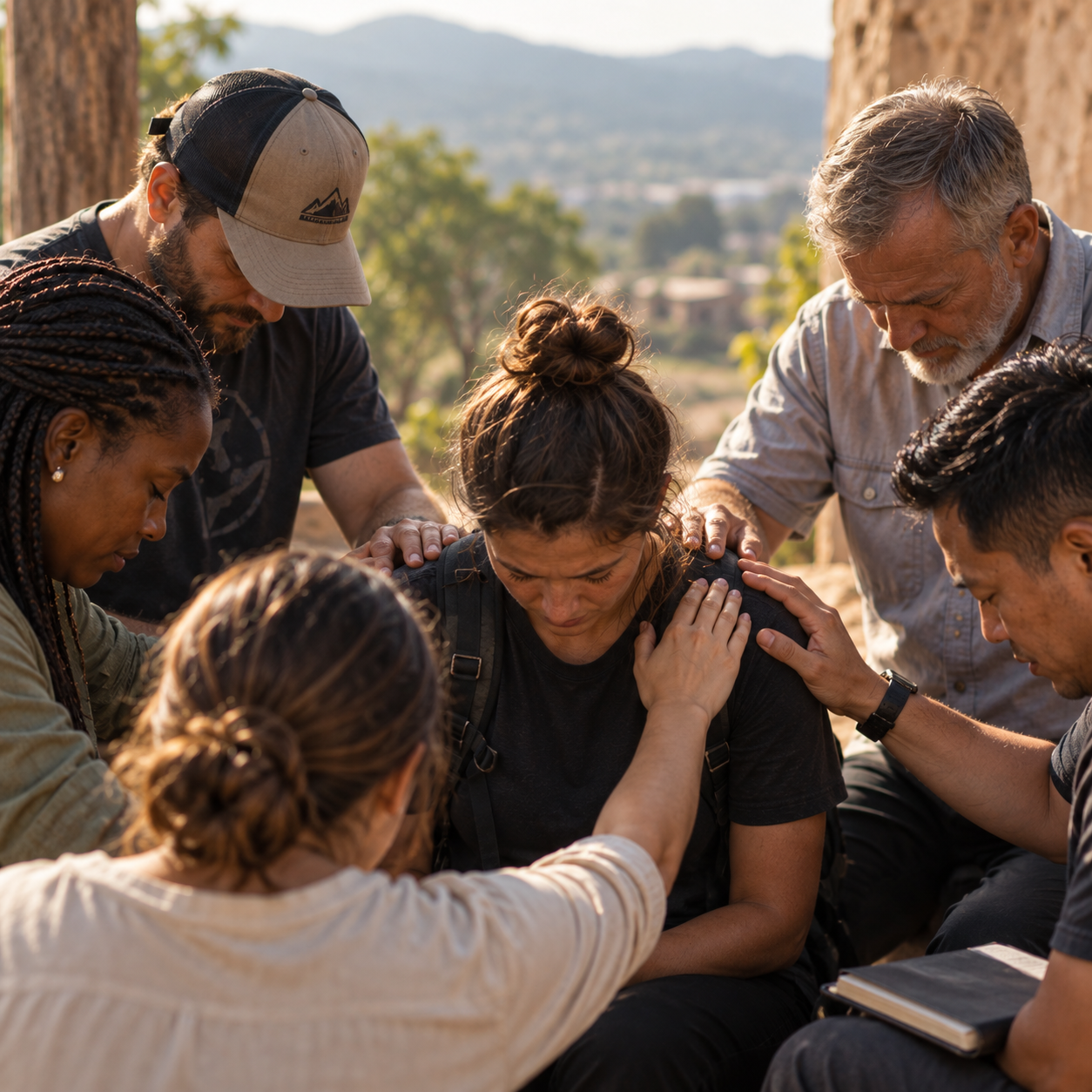
You’re on the front lines. We want to stand behind you. Join Hold the Rope to share your story, prayer needs, and ministry with people ready to pray and engage.

 Prayer
 Mission
 Research &
 Training &
 Videos &
 Missions
Modern evangelical communities in Tajikistan grew mainly during the late Soviet and post-Soviet periods among Russian speakers and later Tajiks; registration laws and restrictions have limited public ministry. That history now shapes how Tajikistan’s churches understand local leadership, witness, and mission. That history matters because today’s churches must serve Tajik Muslims through discreet local relationships and diaspora connections with greater local ownership.
Modern evangelical communities in Tajikistan grew mainly during the late Soviet and post-Soviet periods among Russian speakers and later Tajiks.
registration laws and restrictions have limited public ministry.
Tajik believers increasingly carry discipleship through small local networks and diaspora relationships rather than public institutions.
Contemporary ministry in Tajikistan now intersects with rural families dependent on remittances and remote mountain communities and labor-migrant families. Churches also need practical readiness for earthquakes, landslides, drought, and severe winters.
Reaching Tajik remains part of Tajikistan's mission challenge, but churches also face earthquakes, landslides, drought, and severe winters and must serve rural families dependent on remittances faithfully.

Be a part of what God is doing in Tajikistan
PRAY ENGAGE GIVE GO


Download the App
Grab your rope

Hold the Rope makes every effort to publish and maintain accurate, up-to-date information. If you find an error, please email support@holdtherope.com with the page URL and the correction you recommend. Thank you for helping us keep HTR accurate and useful.