
God Is at Work. You’re Invited Into the Story.
Around the world, God is moving through ordinary people who pray, give, go, and serve. Hold the Rope helps you discover the stories—and find your place in them. Read More
MISSIONS IN
God is moving in Guinea-Bissau
For missions in Guinea-Bissau, the central context is a fragile West African nation where Islam, traditional religion, and a small evangelical church meet across many ethnic communities. 19 unreached people groups remain, representing about 1,039,900 people; Fuuta Torro is the largest listed community. Churches and workers can serve best by strengthening indigenous leadership, pursuing thoughtful evangelism, and responding to the practical.
 2.2M
POPULATION
2.2M
POPULATION
 13%
CHRISTIANS
13%
CHRISTIANS
 59.9%
LITERACY
59.9%
LITERACY
 19
UNREACHED PEOPLE GROUPS
19
UNREACHED PEOPLE GROUPS
 Fuuta
Torro
LARGEST UNREACHED PEOPLE GROUP
Fuuta
Torro
LARGEST UNREACHED PEOPLE GROUP
 1M
UNREACHED POPULATION
1M
UNREACHED POPULATION
 Bissau
CAPITAL CITY
Bissau
CAPITAL CITY
 Bissau
Bafatá
Gabú
LARGEST CITIES
Bissau
Bafatá
Gabú
LARGEST CITIES
 West African CFA Franc
CURRENCY
West African CFA Franc
CURRENCY
 Tropical climate, with a pronounced rainy season, hot dry months, coastal mangroves, and humid inland.
CLIMATE
Tropical climate, with a pronounced rainy season, hot dry months, coastal mangroves, and humid inland.
CLIMATE
 Portuguese
Guinea-Bissau Creole
PRIMARY LANGUAGES
Portuguese
Guinea-Bissau Creole
PRIMARY LANGUAGES
 Islam
LARGEST UNREACHED RELIGION
Islam
LARGEST UNREACHED RELIGION
Around the world, God is moving through ordinary people who pray, give, go, and serve. Hold the Rope helps you discover the stories—and find your place in them. Read More
 Bible Translation
Creole and ethnic-language Scripture resources matter because Portuguese is not everyone's heart language.
Bible Translation
Creole and ethnic-language Scripture resources matter because Portuguese is not everyone's heart language.
 Church Planting
Church planting needs Bissau-Guinean leaders who can cross ethnic boundaries and serve remote communities.
Church Planting
Church planting needs Bissau-Guinean leaders who can cross ethnic boundaries and serve remote communities.
 Disaster Relief
Church planting remains urgent among Somali, coastal Muslim.
Disaster Relief
Church planting remains urgent among Somali, coastal Muslim.
 Education
Church planting remains urgent among Somali, coastal Muslim.
Education
Church planting remains urgent among Somali, coastal Muslim.
 Gospel Access
Nineteen UPGs remain; more than one million unreached Fuuta Torro people form the largest listed community.
Gospel Access
Nineteen UPGs remain; more than one million unreached Fuuta Torro people form the largest listed community.
 Human Trafficking
Church planting remains urgent among Somali, coastal Muslim.
Human Trafficking
Church planting remains urgent among Somali, coastal Muslim.
 Medical Missions
Church planting remains urgent among Somali, coastal Muslim.
Medical Missions
Church planting remains urgent among Somali, coastal Muslim.
 Orphans & Vulnerable Children
Church planting remains urgent among Somali, coastal Muslim.
Orphans & Vulnerable Children
Church planting remains urgent among Somali, coastal Muslim.
 Persecuted Church
Believers generally worship openly, but Muslim-background converts may face family or village pressure.
Persecuted Church
Believers generally worship openly, but Muslim-background converts may face family or village pressure.
 Poverty & Justice
Churches can support agriculture and household livelihoods in a country with few formal economic opportunities.
Poverty & Justice
Churches can support agriculture and household livelihoods in a country with few formal economic opportunities.
 Unreached People Groups
Millions still have little or no access to the gospel in their language and culture.
Unreached People Groups
Millions still have little or no access to the gospel in their language and culture.
Global
Around the world, God is moving through ordinary people who pray, give, go, and serve. Hold the Rope helps you discover the stories—and find your place in them.

Global
Missions was never meant to be a solo adventure. Invite your family, friends, small group, or church to discover what God is doing and join you in holding the rope.
Global
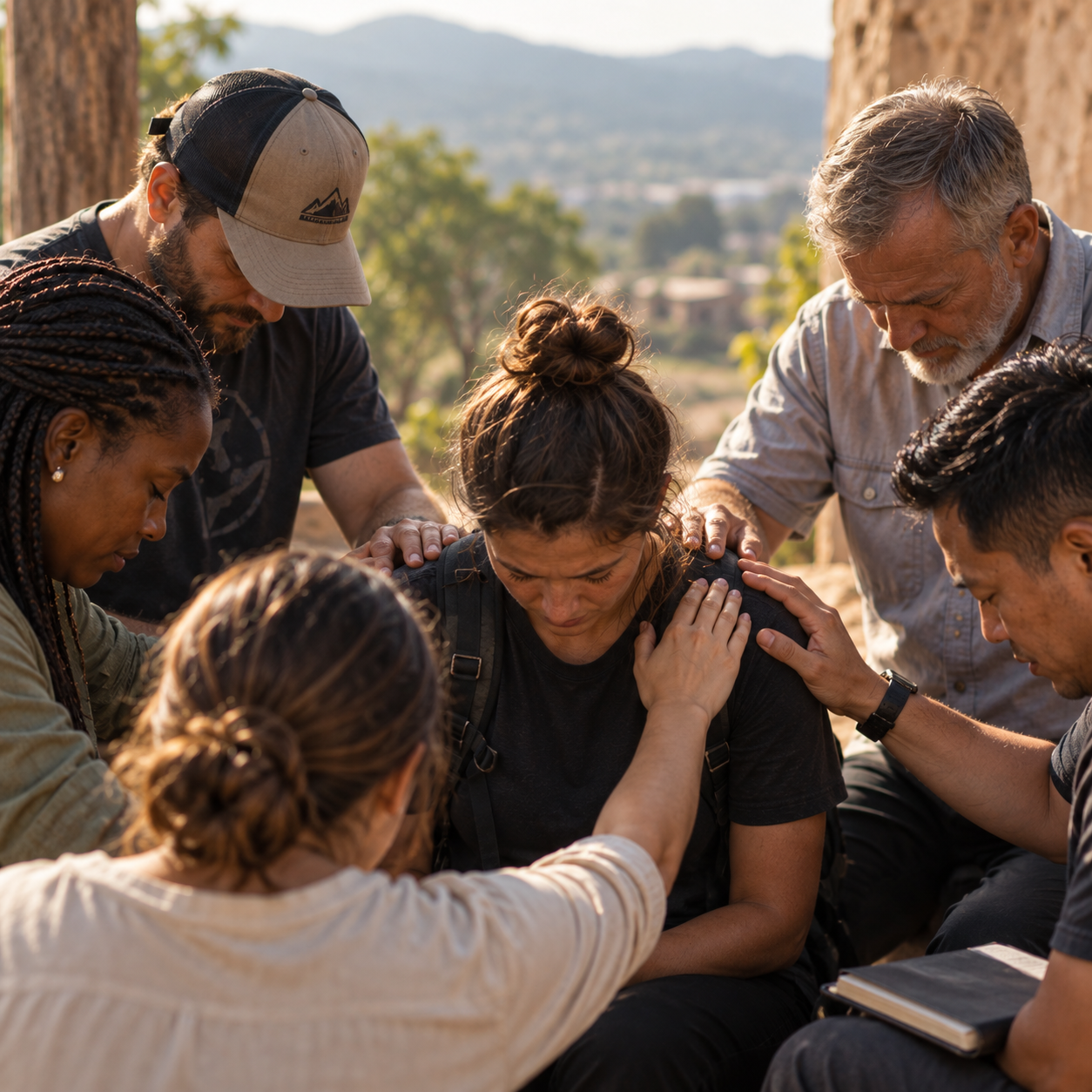
You’re on the front lines. We want to stand behind you. Join Hold the Rope to share your story, prayer needs, and ministry with people ready to pray and engage.

 Prayer
 Mission
 Research &
 Training &
 Videos &
 Missions
Evangelical mission in Guinea-Bissau cannot be understood apart from its historical setting. evangelical mission expanded mainly in the 20th century through Portuguese-speaking and regional African workers, with churches developing among Balanta and other peoples despite political instability and limited infrastructure. The movement changed as national Christians moved from receiving ministry to leading churches, teaching Scripture, serving communities, and in some cases sending workers.
Evangelical mission in Guinea-Bissau developed mainly during the 20th century through Portuguese-speaking and regional African workers.
Small congregations emerged among Balanta and other peoples despite weak infrastructure and repeated political instability.
Bissau-Guinean pastors increasingly carried ministry across ethnic and language boundaries using Creole as a shared language.
Churches broadened literacy, community development, youth ministry, and rural evangelism while remaining a small national minority.
Today's mission challenge is to strengthen local leaders while reaching Muslim peoples concentrated in the east and north.
Be a part of what God is doing in Guinea-Bissau
PRAY ENGAGE GIVE GO


Download the App
Grab your rope

Hold the Rope makes every effort to publish and maintain accurate, up-to-date information. If you find an error, please email support@holdtherope.com with the page URL and the correction you recommend. Thank you for helping us keep HTR accurate and useful.