God Is at Work. You’re Invited Into the Story.
Around the world, God is moving through ordinary people who pray, give, go, and serve. Hold the Rope helps you discover the stories—and find your place in them. Read More
MISSIONS IN
God is moving in Burkina Faso
Missions in Burkina Faso are shaped by a Sahel nation where Islamist violence has displaced communities and closed churches, a growing evangelical church strongest in the south and among several non-Muslim peoples, and 27 unreached peoples, many in Muslim communities, with the Jula the largest listed group. 27 unreached people groups remain, representing about 5,526,400 people; Jula is the largest listed community.
 24M
POPULATION
24M
POPULATION
 24%
CHRISTIANS
24%
CHRISTIANS
 36%
LITERACY
36%
LITERACY
 27
UNREACHED PEOPLE GROUPS
27
UNREACHED PEOPLE GROUPS
 Jula
LARGEST UNREACHED PEOPLE GROUP
Jula
LARGEST UNREACHED PEOPLE GROUP
 5.5M
UNREACHED POPULATION
5.5M
UNREACHED POPULATION
 Ouagadougou
CAPITAL CITY
Ouagadougou
CAPITAL CITY
 Ouagadougou
Bobo-Dioulasso
Koudougou
LARGEST CITIES
Ouagadougou
Bobo-Dioulasso
Koudougou
LARGEST CITIES
 West African CFA Franc
CURRENCY
West African CFA Franc
CURRENCY
 Tropical Sahelian climate, with a long dry season, a shorter rainy season, and hotter, drier conditions.
CLIMATE
Tropical Sahelian climate, with a long dry season, a shorter rainy season, and hotter, drier conditions.
CLIMATE
 French
PRIMARY LANGUAGES
French
PRIMARY LANGUAGES
 Islam
LARGEST UNREACHED RELIGION
Islam
LARGEST UNREACHED RELIGION
Around the world, God is moving through ordinary people who pray, give, go, and serve. Hold the Rope helps you discover the stories—and find your place in them. Read More
 Bible Translation
French and oral-language Bible resources are crucial in a country with dozens of distinct ethnic groups.
Bible Translation
French and oral-language Bible resources are crucial in a country with dozens of distinct ethnic groups.
 Church Planting
Violence in the Sahel makes locally led church planting especially important where outsiders cannot travel.
Church Planting
Violence in the Sahel makes locally led church planting especially important where outsiders cannot travel.
 Disaster Relief
Church planting remains urgent among Somali, coastal Muslim.
Disaster Relief
Church planting remains urgent among Somali, coastal Muslim.
 Education
Church planting remains urgent among Somali, coastal Muslim.
Education
Church planting remains urgent among Somali, coastal Muslim.
 Gospel Access
Burkina Faso has 27 UPGs and about 5.5 million unreached people; the Jula are the largest listed group.
Gospel Access
Burkina Faso has 27 UPGs and about 5.5 million unreached people; the Jula are the largest listed group.
 Human Trafficking
Church planting remains urgent among Somali, coastal Muslim.
Human Trafficking
Church planting remains urgent among Somali, coastal Muslim.
 Medical Missions
Church planting remains urgent among Somali, coastal Muslim.
Medical Missions
Church planting remains urgent among Somali, coastal Muslim.
 Orphans & Vulnerable Children
Church planting remains urgent among Somali, coastal Muslim.
Orphans & Vulnerable Children
Church planting remains urgent among Somali, coastal Muslim.
 Persecuted Church
Extremist attacks have closed churches and uprooted believers, making courage and endurance urgent prayers.
Persecuted Church
Extremist attacks have closed churches and uprooted believers, making courage and endurance urgent prayers.
 Poverty & Justice
Churches can accompany displaced households with food, livelihoods, and practical help that protects dignity.
Poverty & Justice
Churches can accompany displaced households with food, livelihoods, and practical help that protects dignity.
 Unreached People Groups
Millions still have little or no access to the gospel in their language and culture.
Unreached People Groups
Millions still have little or no access to the gospel in their language and culture.
Global
Around the world, God is moving through ordinary people who pray, give, go, and serve. Hold the Rope helps you discover the stories—and find your place in them.
Global
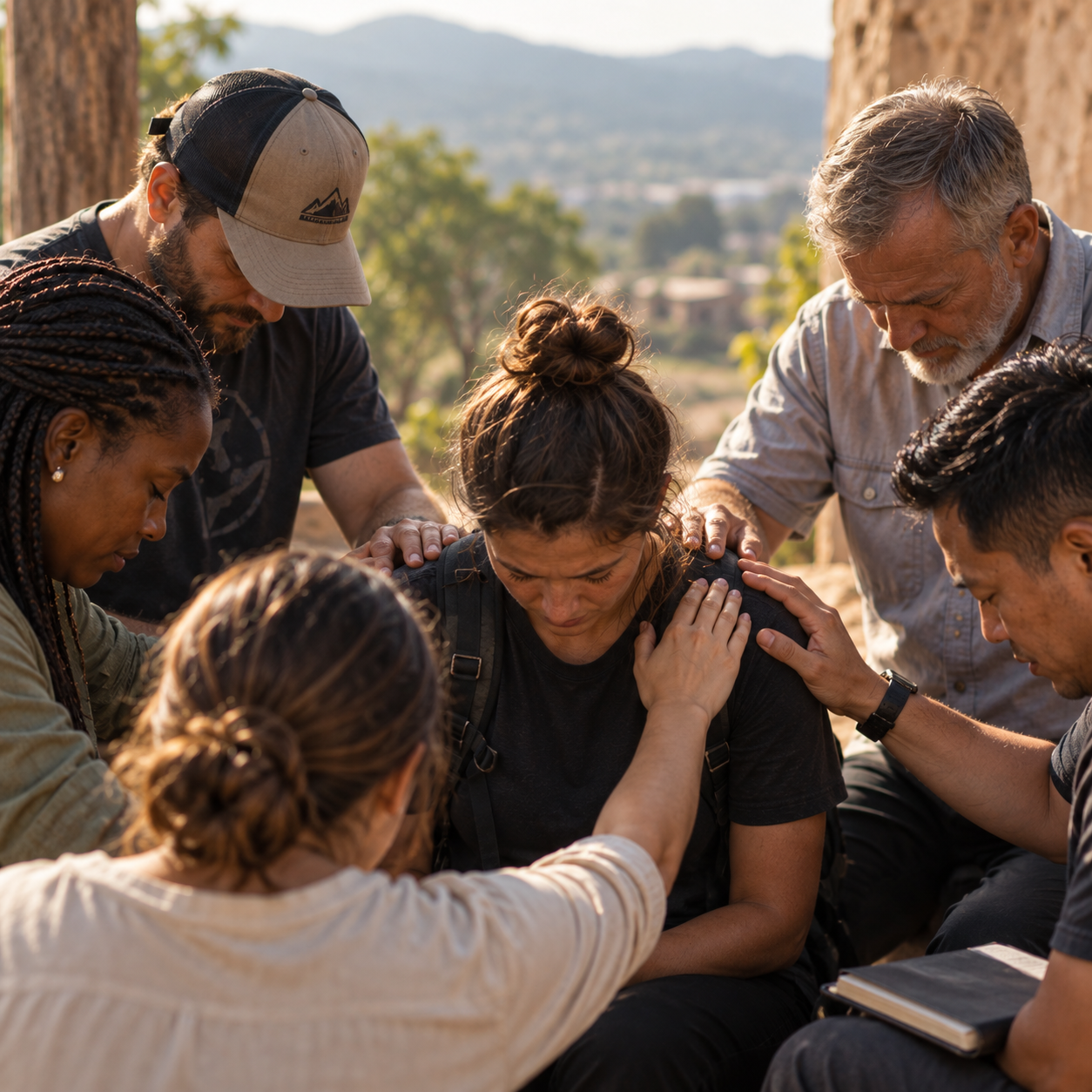
Missions was never meant to be a solo adventure. Invite your family, friends, small group, or church to discover what God is doing and join you in holding the rope.
Global
You’re on the front lines. We want to stand behind you. Join Hold the Rope to share your story, prayer needs, and ministry with people ready to pray and engage.

 Prayer
 Mission
 Research &
 Training &
 Videos &
 Missions
Burkina Faso’s evangelical missions story is closely tied to this history: 20th-century inland missions planted churches and translated Scripture; local churches now serve amid insecurity and displacement. Over time, responsibility increasingly shifted toward local pastors, evangelists, teachers, and churches rather than remaining primarily in foreign hands. Political change, migration, conflict, or secularization reshaped the movement in different eras.
Twentieth-century mission societies planted churches, translated Scripture, and trained believers in Upper Volta.
Evangelical congregations grew especially among southern and central peoples as Burkinabè leaders assumed responsibility.
National churches gradually developed their own pastors, Bible schools, evangelists, and cross-cultural workers.
Since the 2010s, jihadist violence has displaced congregations and shifted much ministry toward relief and trauma care.
Burkinabè believers now pursue Gospel witness amid insecurity while seeking the country's 27 unreached peoples.
Be a part of what God is doing in Burkina Faso
PRAY ENGAGE GIVE GO


Download the App
Grab your rope
Hold the Rope makes every effort to publish and maintain accurate, up-to-date information. If you find an error, please email support@holdtherope.com with the page URL and the correction you recommend. Thank you for helping us keep HTR accurate and useful.