God Is at Work. You’re Invited Into the Story.
Around the world, God is moving through ordinary people who pray, give, go, and serve. Hold the Rope helps you discover the stories—and find your place in them. Read More
MISSIONS IN
God is moving in Gabon
Gabon presents a distinctive missions landscape: a small Central African nation with a long Presbyterian and evangelical heritage, high urbanization, and uneven discipleship. 5 unreached people groups remain, representing about 68,900 people; Fulani, Adamawa is the largest listed community. Effective ministry depends on mature local leadership, clear Scripture teaching, and patient relationships rather than imported programs that overlook local.
 2.6M
POPULATION
2.6M
POPULATION
 84.7%
CHRISTIANS
84.7%
CHRISTIANS
 83.2%
LITERACY
83.2%
LITERACY
 5
UNREACHED PEOPLE GROUPS
5
UNREACHED PEOPLE GROUPS
 Fulani
Adamawa
LARGEST UNREACHED PEOPLE GROUP
Fulani
Adamawa
LARGEST UNREACHED PEOPLE GROUP
 69K
UNREACHED POPULATION
69K
UNREACHED POPULATION
 Libreville
CAPITAL CITY
Libreville
CAPITAL CITY
 Libreville
Port-Gentil
Franceville
LARGEST CITIES
Libreville
Port-Gentil
Franceville
LARGEST CITIES
 Central African CFA Franc
CURRENCY
Central African CFA Franc
CURRENCY
 Equatorial tropical climate, with high humidity, heavy rain, warm temperatures, and dense inland forest.
CLIMATE
Equatorial tropical climate, with high humidity, heavy rain, warm temperatures, and dense inland forest.
CLIMATE
 French
PRIMARY LANGUAGES
French
PRIMARY LANGUAGES
 Islam
LARGEST UNREACHED RELIGION
Islam
LARGEST UNREACHED RELIGION
Around the world, God is moving through ordinary people who pray, give, go, and serve. Hold the Rope helps you discover the stories—and find your place in them. Read More
 Bible Translation
French Scripture is common, while local-language resources can strengthen rural and ethnic-minority congregations.
Bible Translation
French Scripture is common, while local-language resources can strengthen rural and ethnic-minority congregations.
 Church Planting
Libreville's rapid growth needs healthy churches, while interior communities require leaders who can serve locally.
Church Planting
Libreville's rapid growth needs healthy churches, while interior communities require leaders who can serve locally.
 Disaster Relief
Church planting remains urgent among Somali, coastal Muslim.
Disaster Relief
Church planting remains urgent among Somali, coastal Muslim.
 Education
Church planting remains urgent among Somali, coastal Muslim.
Education
Church planting remains urgent among Somali, coastal Muslim.
 Gospel Access
Gabon has five UPGs; its largest listed frontier is the approximately 68,900 unreached Adamawa Fulani.
Gospel Access
Gabon has five UPGs; its largest listed frontier is the approximately 68,900 unreached Adamawa Fulani.
 Human Trafficking
Church planting remains urgent among Somali, coastal Muslim.
Human Trafficking
Church planting remains urgent among Somali, coastal Muslim.
 Medical Missions
Church planting remains urgent among Somali, coastal Muslim.
Medical Missions
Church planting remains urgent among Somali, coastal Muslim.
 Orphans & Vulnerable Children
Church planting remains urgent among Somali, coastal Muslim.
Orphans & Vulnerable Children
Church planting remains urgent among Somali, coastal Muslim.
 Persecuted Church
Believers worship openly; church unity, integrity, and theological depth are more pressing than state persecution.
Persecuted Church
Believers worship openly; church unity, integrity, and theological depth are more pressing than state persecution.
 Poverty & Justice
Churches can address the gap between oil wealth and household poverty through livelihoods and family support.
Poverty & Justice
Churches can address the gap between oil wealth and household poverty through livelihoods and family support.
 Unreached People Groups
Millions still have little or no access to the gospel in their language and culture.
Unreached People Groups
Millions still have little or no access to the gospel in their language and culture.
Global
Around the world, God is moving through ordinary people who pray, give, go, and serve. Hold the Rope helps you discover the stories—and find your place in them.
Global
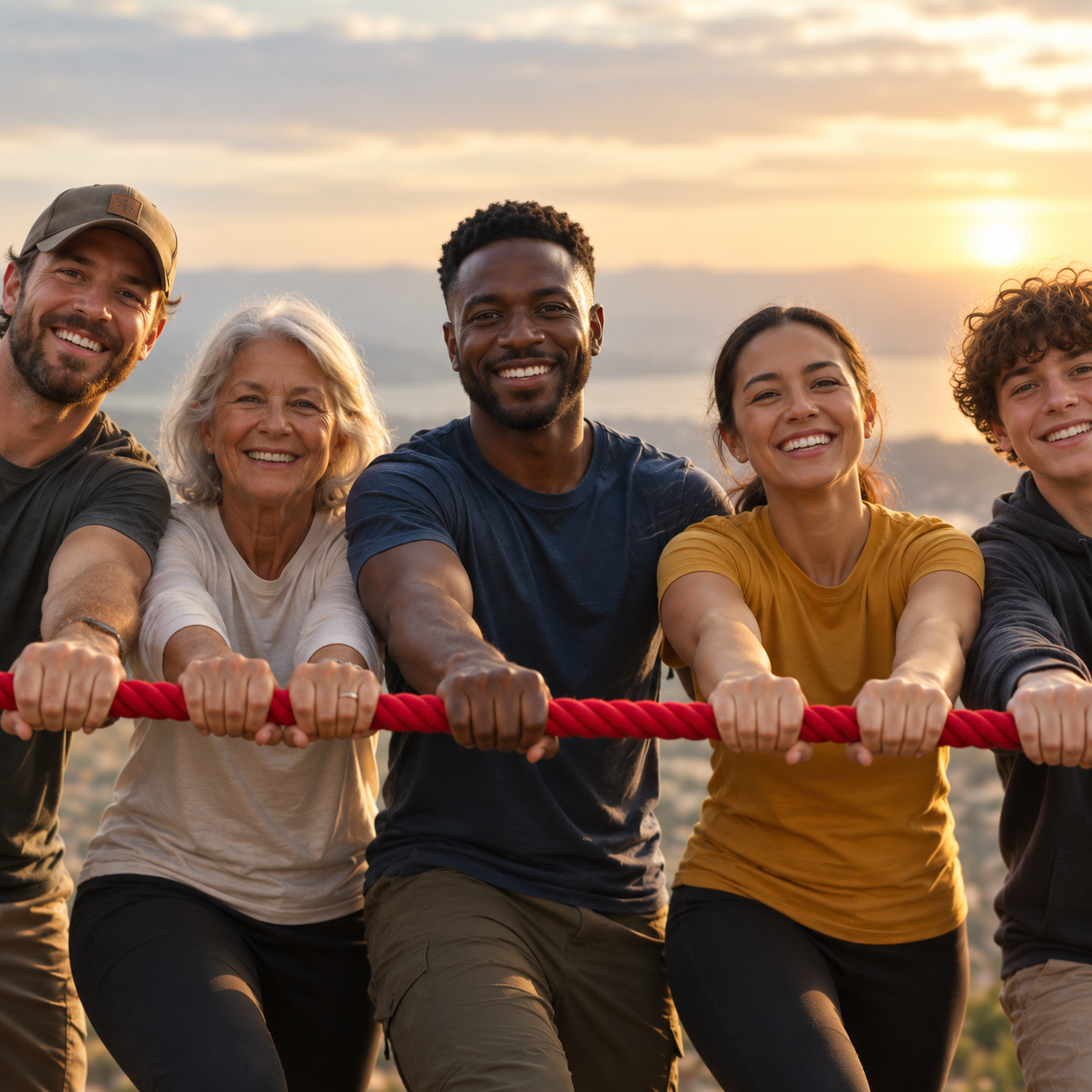
Missions was never meant to be a solo adventure. Invite your family, friends, small group, or church to discover what God is doing and join you in holding the rope.
Global
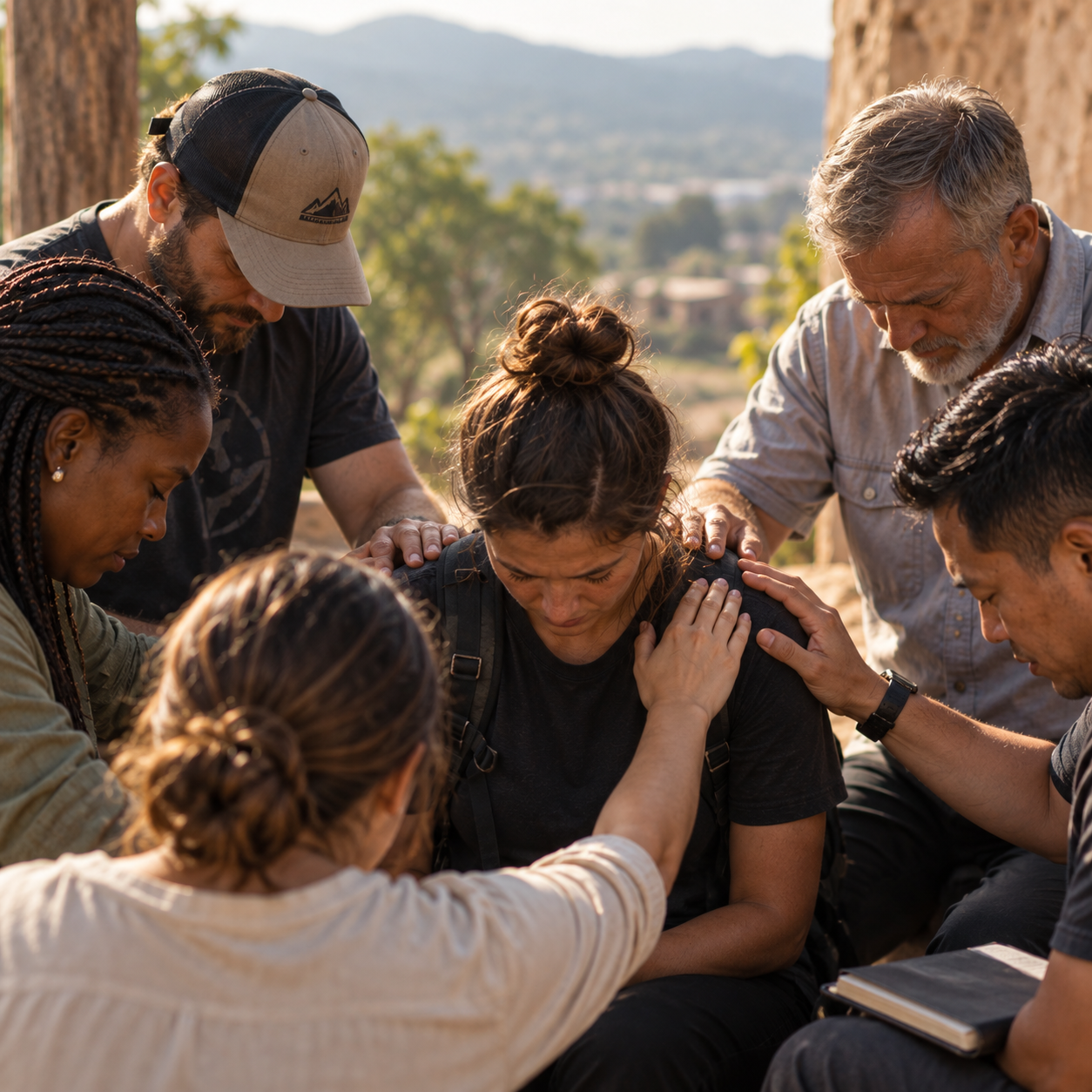
You’re on the front lines. We want to stand behind you. Join Hold the Rope to share your story, prayer needs, and ministry with people ready to pray and engage.

 Prayer
 Mission
 Research &
 Training &
 Videos &
 Missions
The modern evangelical story in Gabon developed through several important transitions. American Board missionaries began work in 1842, Presbyterian missions followed, and the Paris Missionary Society later assumed responsibility; the Evangelical Church of Gabon became autonomous in 1961. What began through outside mission initiatives increasingly became the work of national believers who built congregations, trained leaders, and adapted ministry to local realities.
American Board missionaries began evangelical work in the region that became Gabon in 1842.
American Presbyterian missions followed, while the Paris Missionary Society gradually assumed responsibility from 1889.
Gabonese pastors and congregations matured until the Evangelical Church of Gabon became autonomous in 1961.
Internal church divisions weakened witness after 1970, followed by major reconciliation and reunification efforts in the 1990s.
Gabonese evangelicals now seek stronger unity, biblical leadership, and outreach to less-reached Muslim communities.
Be a part of what God is doing in Gabon
PRAY ENGAGE GIVE GO


Download the App
Grab your rope

Hold the Rope makes every effort to publish and maintain accurate, up-to-date information. If you find an error, please email support@holdtherope.com with the page URL and the correction you recommend. Thank you for helping us keep HTR accurate and useful.