
God Is at Work. You’re Invited Into the Story.
Around the world, God is moving through ordinary people who pray, give, go, and serve. Hold the Rope helps you discover the stories—and find your place in them. Read More
MISSIONS IN
God is moving in Equatorial Guinea
Missions in Equatorial Guinea are shaped by a small oil-producing nation where broad Christian identity coexists with political control, inequality, and limited evangelical infrastructure. 2 unreached people groups remain, representing about 36,800 people; Hausa is the largest listed community. The strongest long-term opportunities combine locally led churches, biblical discipleship, practical service, and witness that fits the country’s.
 1.9M
POPULATION
1.9M
POPULATION
 87.8%
CHRISTIANS
87.8%
CHRISTIANS
 95.3%
LITERACY
95.3%
LITERACY
 2
UNREACHED PEOPLE GROUPS
2
UNREACHED PEOPLE GROUPS
 Hausa
LARGEST UNREACHED PEOPLE GROUP
Hausa
LARGEST UNREACHED PEOPLE GROUP
 37K
UNREACHED POPULATION
37K
UNREACHED POPULATION
 Malabo
CAPITAL CITY
Malabo
CAPITAL CITY
 Bata
Malabo
Ebebiyín
LARGEST CITIES
Bata
Malabo
Ebebiyín
LARGEST CITIES
 Central African CFA Franc
CURRENCY
Central African CFA Franc
CURRENCY
 Equatorial tropical climate, with high heat, humidity, heavy rainfall, and distinct wet seasons across.
CLIMATE
Equatorial tropical climate, with high heat, humidity, heavy rainfall, and distinct wet seasons across.
CLIMATE
 Spanish
Fang
PRIMARY LANGUAGES
Spanish
Fang
PRIMARY LANGUAGES
 Islam
LARGEST UNREACHED RELIGION
Islam
LARGEST UNREACHED RELIGION
Around the world, God is moving through ordinary people who pray, give, go, and serve. Hold the Rope helps you discover the stories—and find your place in them. Read More
 Bible Translation
Spanish and Fang Scripture can deepen biblical understanding beyond the country's broad Christian identity.
Bible Translation
Spanish and Fang Scripture can deepen biblical understanding beyond the country's broad Christian identity.
 Church Planting
Small evangelical networks need well-trained Equatoguinean pastors outside the main centers of Malabo and Bata.
Church Planting
Small evangelical networks need well-trained Equatoguinean pastors outside the main centers of Malabo and Bata.
 Disaster Relief
Church planting remains urgent among Somali, coastal Muslim.
Disaster Relief
Church planting remains urgent among Somali, coastal Muslim.
 Education
Church planting remains urgent among Somali, coastal Muslim.
Education
Church planting remains urgent among Somali, coastal Muslim.
 Gospel Access
Two UPGs remain, including roughly 36,800 Hausa, creating a focused cross-cultural opportunity.
Gospel Access
Two UPGs remain, including roughly 36,800 Hausa, creating a focused cross-cultural opportunity.
 Human Trafficking
Church planting remains urgent among Somali, coastal Muslim.
Human Trafficking
Church planting remains urgent among Somali, coastal Muslim.
 Medical Missions
Church planting remains urgent among Somali, coastal Muslim.
Medical Missions
Church planting remains urgent among Somali, coastal Muslim.
 Orphans & Vulnerable Children
Church planting remains urgent among Somali, coastal Muslim.
Orphans & Vulnerable Children
Church planting remains urgent among Somali, coastal Muslim.
 Persecuted Church
Christian worship is permitted, though political controls can constrain independent church life.
Persecuted Church
Christian worship is permitted, though political controls can constrain independent church life.
 Poverty & Justice
Congregations can serve families excluded from oil prosperity through livelihoods, tutoring, and practical assistance.
Poverty & Justice
Congregations can serve families excluded from oil prosperity through livelihoods, tutoring, and practical assistance.
 Unreached People Groups
Millions still have little or no access to the gospel in their language and culture.
Unreached People Groups
Millions still have little or no access to the gospel in their language and culture.
Global
Around the world, God is moving through ordinary people who pray, give, go, and serve. Hold the Rope helps you discover the stories—and find your place in them.

Global
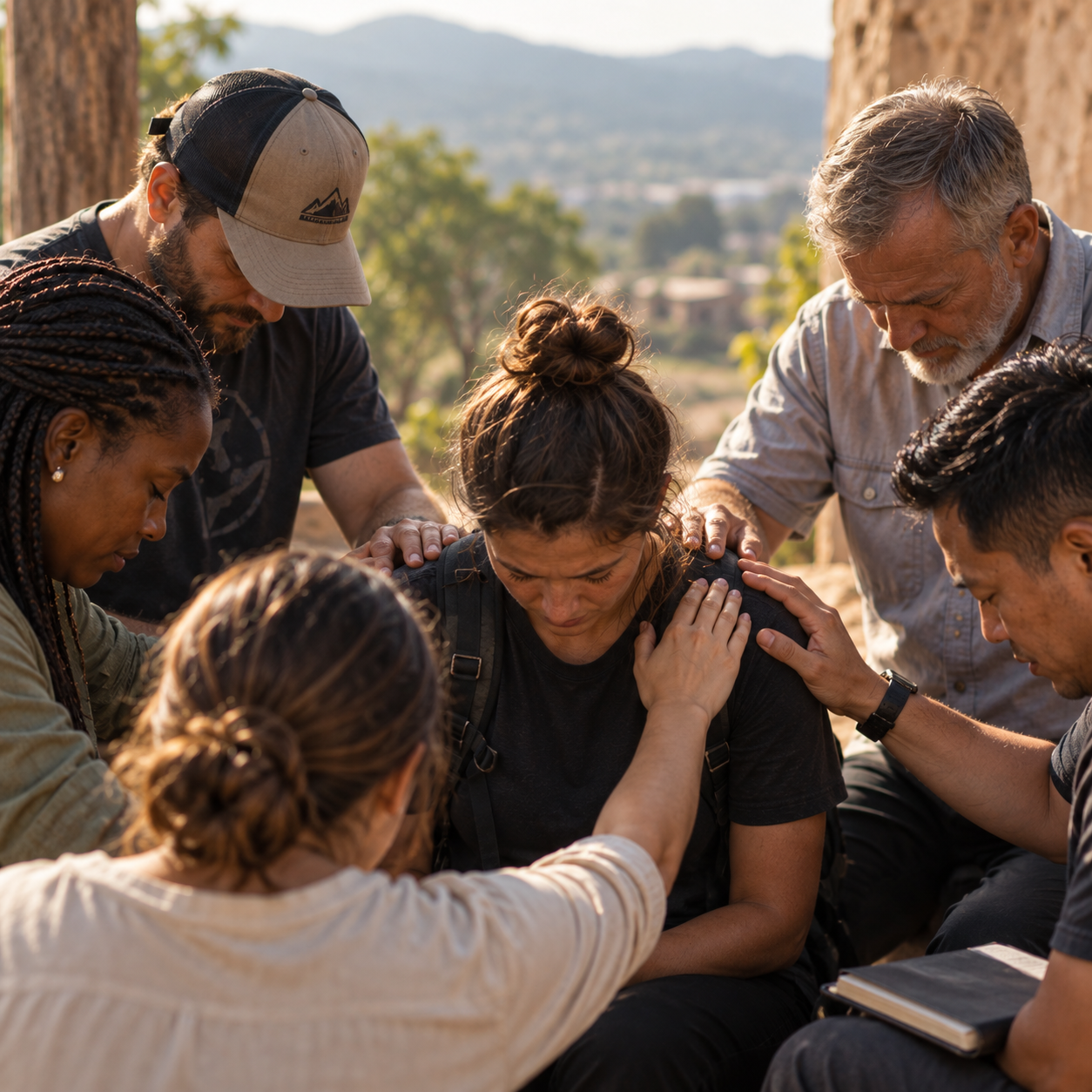
Missions was never meant to be a solo adventure. Invite your family, friends, small group, or church to discover what God is doing and join you in holding the rope.
Global
You’re on the front lines. We want to stand behind you. Join Hold the Rope to share your story, prayer needs, and ministry with people ready to pray and engage.

 Prayer
 Mission
 Research &
 Training &
 Videos &
 Missions
Equatorial Guinea’s evangelical missions history helps explain its present church. Presbyterian mission work began on Corisco and the mainland in the 19th century, later developing churches, schools, and translation before local leadership grew through colonial and post-independence upheaval. Over time, local pastors, teachers, evangelists, and congregations assumed greater responsibility for ministry.
Presbyterian missionaries established churches and schools on Corisco and the mainland during the 19th century.
Mission work expanded among Fang and coastal communities as Spanish colonial rule increasingly shaped public life.
Equatoguinean pastors gradually assumed responsibility through independence and the political upheaval that followed.
Later evangelical and Pentecostal congregations grew in Malabo, Bata, and mainland towns despite limited institutional resources.
Today's churches need stronger theological training and locally rooted leadership in a nation transformed by oil wealth.
Be a part of what God is doing in Equatorial Guinea
PRAY ENGAGE GIVE GO


Download the App
Grab your rope
Hold the Rope makes every effort to publish and maintain accurate, up-to-date information. If you find an error, please email support@holdtherope.com with the page URL and the correction you recommend. Thank you for helping us keep HTR accurate and useful.