
Skip to content

HISTORY OF MISSIONS

Angola

Angola

Missions Timeline

From the arrival of the first missionaries to the vibrant church movement of today, God has been working in Angola for over a hundred years – transforming lives and sending believers to the ends of the earth

  1. Early Beginnings

    Late-1800s missions established churches, schools, medical work, and Bible translation in Angola.

  2. 1900s

    During the 1900s, churches expanded as Angolan pastors and evangelists assumed greater leadership.

  3. Independence Era

    Independence and civil war tested churches, yet local believers preserved and expanded ministry.

  4. Modern Movement

    After peace in 2002, churches grew in discipleship, leadership training, and compassion ministry.

  5. Today

    Today, Angolan believers are increasingly positioned to strengthen churches and send missionaries.

Milestones that Shape the Mission Story of Angola

  1. 1878 TO 1885

    Protestant Missions Enter Angola

    Modern Protestant missions in Angola began in earnest during the late nineteenth century. The Baptist Missionary Society began work in Angola in 1878, expanding from mission e orts farther north in the Congo basin. Baptist missionaries developed congregations particularly among Bakongo communities in northern Angola. Other Protestant societies soon followed. Modern Protestant missions in Angola began in earnest during the late nineteenth century. The Baptist Missionary Society began work in

    1 MINUTE READ

  2. 1885 TO 1920s

    Missions Spread Across Angola

    In 1885, missionaries connected with American Methodist bishop William Taylor began establishing work in Angola. Taylor advocated a model of self-supporting missions and helped expand Methodist ministry in several parts of Africa. Congregational missionaries also established influential work in Angola’s central highlands. Mission stations became more than preaching centers. They often included schools, clinics, teacher training, agricultural work, printing, Bible instruction, and pastoral education. This gave Protestant missions an unusual

    1 MINUTE READ

  3. 1890s TO 1961

    Scripture and Indigenous Leadership

    Bible translation became one of the most consequential dimensions of missions in Angola. Missionaries and Angolan language speakers translated Scripture into languages including Umbundu and others. The New Testament became available in Umbundu by the late nineteenth century, with a complete Bible following later.

  4. 1961 TO 2002

    Nationalism, Independence & War

    Angola’s war for independence began in 1961. The conflict radically disrupted mission work. Communities were displaced, missionaries left some regions, and churches became entangled in the political geography of Angola’s independence movements. Among Baptists, the years from 1961 to 1974 became known as a period of exile as large numbers of believers from northern Angola fled

  5. 1961 TO TODAY

    Rebuilding & The Angolan Church

    The death of UNITA leader Jonas Savimbi in 2002 helped bring Angola’s long civil war to an end. Peace created new possibilities for churches that had spent decades surviving conflict. Congregations rebuilt buildings and ministries. Seminaries and Bible schools trained a new generation of leaders. Churches expanded humanitarian, educational, and discipleship work

The State of Missions in Angola

Missions in Angola build on a long evangelical heritage in a rapidly growing African nation. Evangelical churches have deep roots, yet decades of war, poverty, urban growth, and uneven access to education and healthcare continue to shape ministry needs. Today, Angolan believers and mission partners serve through church planting, discipleship, leadership training, compassion, and cross-cultural outreach.

  • 40M POPULATION
  • 91% CHRISTIANS
  • 71% LITERACY
  • 60 TOTAL PEOPLE GROUPS
  • 5 UNREACHED PEOPLE GROUPS
  • KUVALE LARGEST UNREACHED PEOPLE GROUP
  • 364K UNREACHED POPULATION
  • LUANDA CAPITAL CITY
  • LUANDA LUBANGO HUAMBO LARGEST CITIES
  • ANGOLAN KWANZA CURRENCY
  • The south and coast are semi-arid; northern Angola is wetter, with pronounced wet and dry seasons. CLIMATE
  • PORTUGUESE UMBUNDU PRIMARY LANGUAGES
  • TRIBAL LARGEST UNREACHED RELIGION

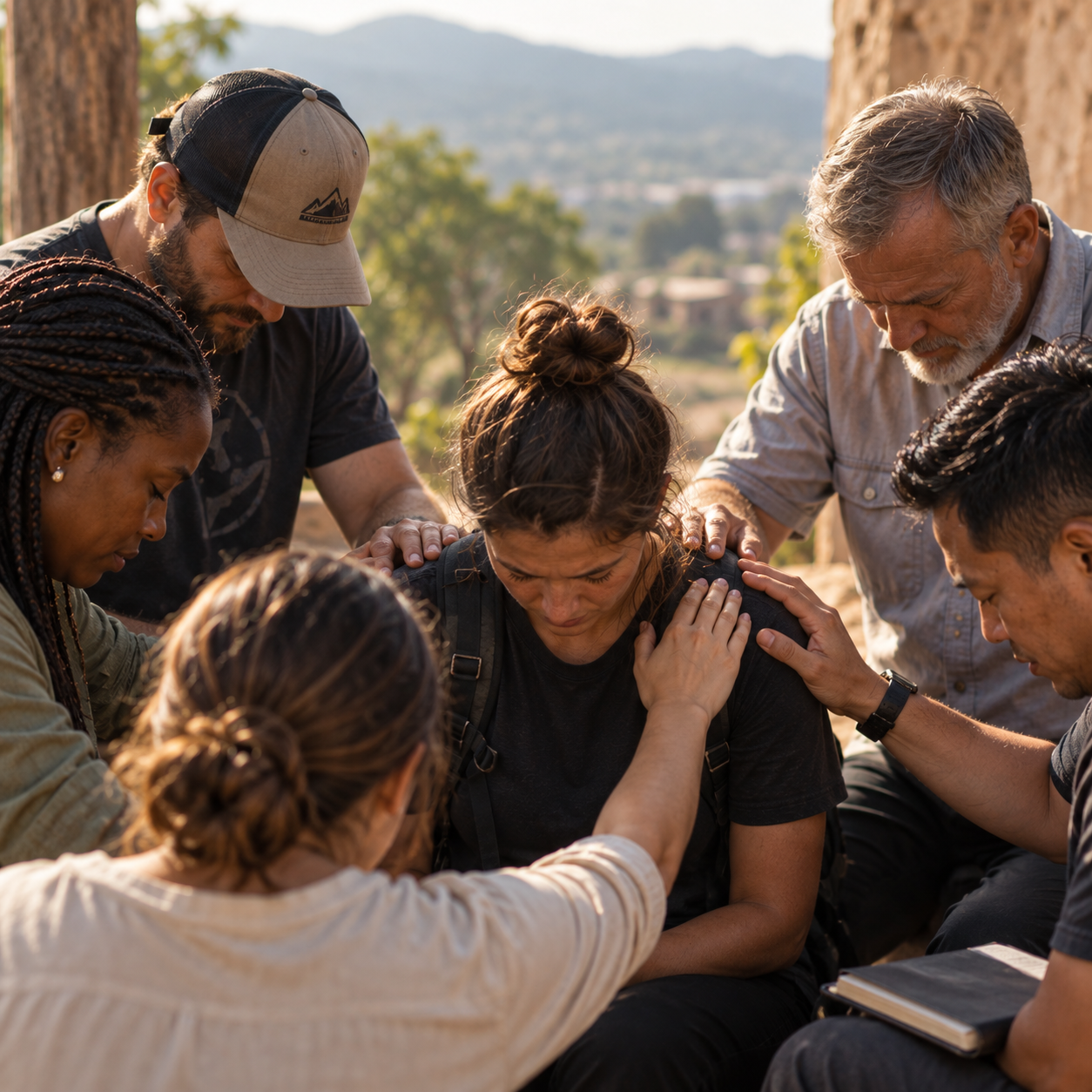
Prayer for Angola

  • PRAY FOR Lorem ipsum dolor sit amet, consectetuer adipiscing elit, sed diam nonummy nibh
  • PRAY FOR Lorem ipsum dolor sit amet, consectetuer adipiscing elit, sed diam nonummy nibh
  • PRAY FOR Lorem ipsum dolor sit amet, consectetuer adipiscing elit, sed diam nonummy nibh
  • PRAY FOR Lorem ipsum dolor sit amet, consectetuer adipiscing elit, sed diam nonummy nibh
  • PRAY FOR Lorem ipsum dolor sit amet, consectetuer adipiscing elit, sed diam nonummy nibh
Hold The Rope app

Be a part of what God is doing in Angola

PRAY ENGAGE GIVE GO

Download the App

Grab your rope

This field is for validation purposes and should be left unchanged.
I'm not a robot(Required)
Newsletter