
God Is at Work. You’re Invited Into the Story.
Around the world, God is moving through ordinary people who pray, give, go, and serve. Hold the Rope helps you discover the stories—and find your place in them. Read More
MISSIONS IN
God is moving in Estonia
For missions in Estonia, the central context is one of Europe’s most secular societies, yet a country with historic Moravian, Baptist, and free-church roots. 3 unreached people groups remain, representing about 4,700 people; Jewish, Eastern Yiddish speaking is the largest listed community. Churches and workers can serve best by strengthening indigenous leadership, pursuing thoughtful evangelism, and responding to the practical pressures facing.
 1.4M
POPULATION
1.4M
POPULATION
 36.5%
CHRISTIANS
36.5%
CHRISTIANS
 99.8%
LITERACY
99.8%
LITERACY
 3
UNREACHED PEOPLE GROUPS
3
UNREACHED PEOPLE GROUPS
 Jewish
Eastern Yiddish speaking
LARGEST UNREACHED PEOPLE GROUP
Jewish
Eastern Yiddish speaking
LARGEST UNREACHED PEOPLE GROUP
 4.7K
UNREACHED POPULATION
4.7K
UNREACHED POPULATION
 Tallinn
CAPITAL CITY
Tallinn
CAPITAL CITY
 Tallinn
Tartu
Narva
LARGEST CITIES
Tallinn
Tartu
Narva
LARGEST CITIES
 Euro
CURRENCY
Euro
CURRENCY
 Cool maritime climate, with mild summers, cold winters, frequent clouds, and precipitation year-round.
CLIMATE
Cool maritime climate, with mild summers, cold winters, frequent clouds, and precipitation year-round.
CLIMATE
 Estonian
Russian
PRIMARY LANGUAGES
Estonian
Russian
PRIMARY LANGUAGES
 Ethnic
LARGEST UNREACHED RELIGION
Ethnic
LARGEST UNREACHED RELIGION
Around the world, God is moving through ordinary people who pray, give, go, and serve. Hold the Rope helps you discover the stories—and find your place in them. Read More
 Bible Translation
Estonian and Russian Bibles are accessible; the challenge is persuading secular people to engage them seriously.
Bible Translation
Estonian and Russian Bibles are accessible; the challenge is persuading secular people to engage them seriously.
 Church Planting
Church planting can reach Tallinn professionals, Russian-speaking Narva, and towns with little evangelical community.
Church Planting
Church planting can reach Tallinn professionals, Russian-speaking Narva, and towns with little evangelical community.
 Disaster Relief
Church planting remains urgent among Somali, coastal Muslim.
Disaster Relief
Church planting remains urgent among Somali, coastal Muslim.
 Education
Church planting remains urgent among Somali, coastal Muslim.
Education
Church planting remains urgent among Somali, coastal Muslim.
 Gospel Access
Three UPGs remain, including a small Eastern Yiddish-speaking Jewish community of roughly 4,700 people.
Gospel Access
Three UPGs remain, including a small Eastern Yiddish-speaking Jewish community of roughly 4,700 people.
 Human Trafficking
Church planting remains urgent among Somali, coastal Muslim.
Human Trafficking
Church planting remains urgent among Somali, coastal Muslim.
 Medical Missions
Church planting remains urgent among Somali, coastal Muslim.
Medical Missions
Church planting remains urgent among Somali, coastal Muslim.
 Orphans & Vulnerable Children
Church planting remains urgent among Somali, coastal Muslim.
Orphans & Vulnerable Children
Church planting remains urgent among Somali, coastal Muslim.
 Persecuted Church
Religious freedom is strong; indifference, secular assumptions, and demographic decline are the greater barriers.
Persecuted Church
Religious freedom is strong; indifference, secular assumptions, and demographic decline are the greater barriers.
 Poverty & Justice
Churches can serve elderly and Russian-speaking communities affected by isolation or uneven economic opportunity.
Poverty & Justice
Churches can serve elderly and Russian-speaking communities affected by isolation or uneven economic opportunity.
 Unreached People Groups
Millions still have little or no access to the gospel in their language and culture.
Unreached People Groups
Millions still have little or no access to the gospel in their language and culture.
Global
Around the world, God is moving through ordinary people who pray, give, go, and serve. Hold the Rope helps you discover the stories—and find your place in them.

Global
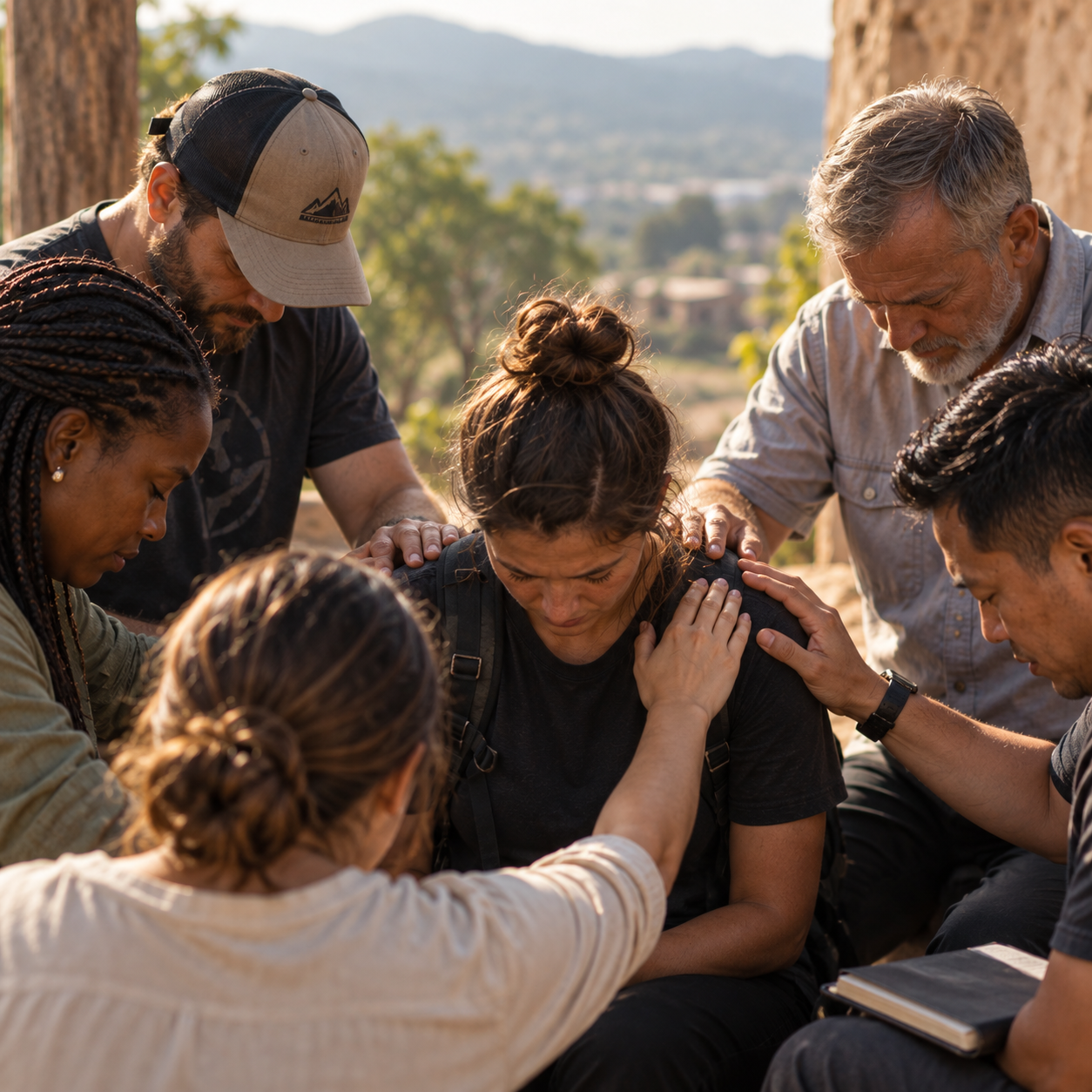
Missions was never meant to be a solo adventure. Invite your family, friends, small group, or church to discover what God is doing and join you in holding the rope.
Global
You’re on the front lines. We want to stand behind you. Join Hold the Rope to share your story, prayer needs, and ministry with people ready to pray and engage.

 Prayer
 Mission
 Research &
 Training &
 Videos &
 Missions
Evangelical mission in Estonia cannot be understood apart from its historical setting. Moravian revival currents influenced Estonia from the 18th century, Baptist congregations emerged in the 19th, and churches endured Soviet atheism before rebuilding openly after independence in 1991. The movement changed as national Christians moved from receiving ministry to leading churches, teaching Scripture, serving communities, and in some cases sending workers themselves.
Moravian renewal movements influenced Estonian peasants during the 18th century and encouraged lay Bible reading.
Baptist congregations emerged in the 19th century alongside other free-church and revival traditions.
Estonian believers endured Soviet atheism, church restrictions, and pressure on Christian public life after World War II.
Independence in 1991 restored religious freedom and allowed Baptist, Pentecostal, and other evangelical ministries to rebuild openly.
Estonian churches now pursue patient witness among a highly secular population and significant Russian-speaking communities.

Be a part of what God is doing in Estonia
PRAY ENGAGE GIVE GO


Download the App
Grab your rope
Hold the Rope makes every effort to publish and maintain accurate, up-to-date information. If you find an error, please email support@holdtherope.com with the page URL and the correction you recommend. Thank you for helping us keep HTR accurate and useful.